Thailand continues to be positioned as a major destination for international patients, and fertility care is increasingly part of that story. Multiple global overviews of medical travel list Thailand among leading medical tourism destinations, alongside countries such as Mexico, India, Turkey, Malaysia, Costa Rica, and Singapore. Globally, fertility treatments—particularly IVF—represent about 12% of medical tourism, according to medical tourism statistics that break demand down by service line. This matters because fertility tourism is explicitly driven by patients traveling to circumvent local legal restrictions, reduce personal costs, or access expert care that is not available or affordable at home. In other words, permissive rules and advanced care are not side notes; they are core demand drivers for cross-border reproductive travel.
The macro-growth backdrop for fertility tourism is strong, and it helps explain why Thailand is competing harder in this segment. One market outlook expects the fertility tourism market to rise from USD 0.96 billion in 2025 to USD 1.24 billion in 2026, a CAGR of 29.9%. The same outlook forecasts expansion to USD 3.5 billion by 2030, at a CAGR of 29.5%. The stated growth reasons map closely to what patients seek in Thailand’s IVF and fertility offerings: legalization of IVF and surrogacy in various countries, advances in fertility clinic services, and the development of medical tourism infrastructure. These factors can amplify destination appeal even when patients start their journey abroad.
Why Thailand’s IVF Value Proposition Keeps Strengthening
Two structural themes keep lifting Thailand’s fertility and IVF appeal: modern clinical capability and a tourism system that is actively trying to build higher-value travel categories. A medical tourism growth outlook notes that hospitals in destinations such as India, Thailand, Mexico, and Turkey have gained global recognition for advanced procedures, including fertility treatments, supported by skilled professionals and modern infrastructure. At the same time, Thailand’s tourism authority has stated a strategy to “Build New Growth Engine” and turn national strengths into economic value through the “Life Economy,” while also targeting higher-value visitor segments. Even though this plan is not limited to fertility, it aligns with how cross-border IVF patients typically evaluate destinations: quality signals, infrastructure, and coordinated visitor experience.
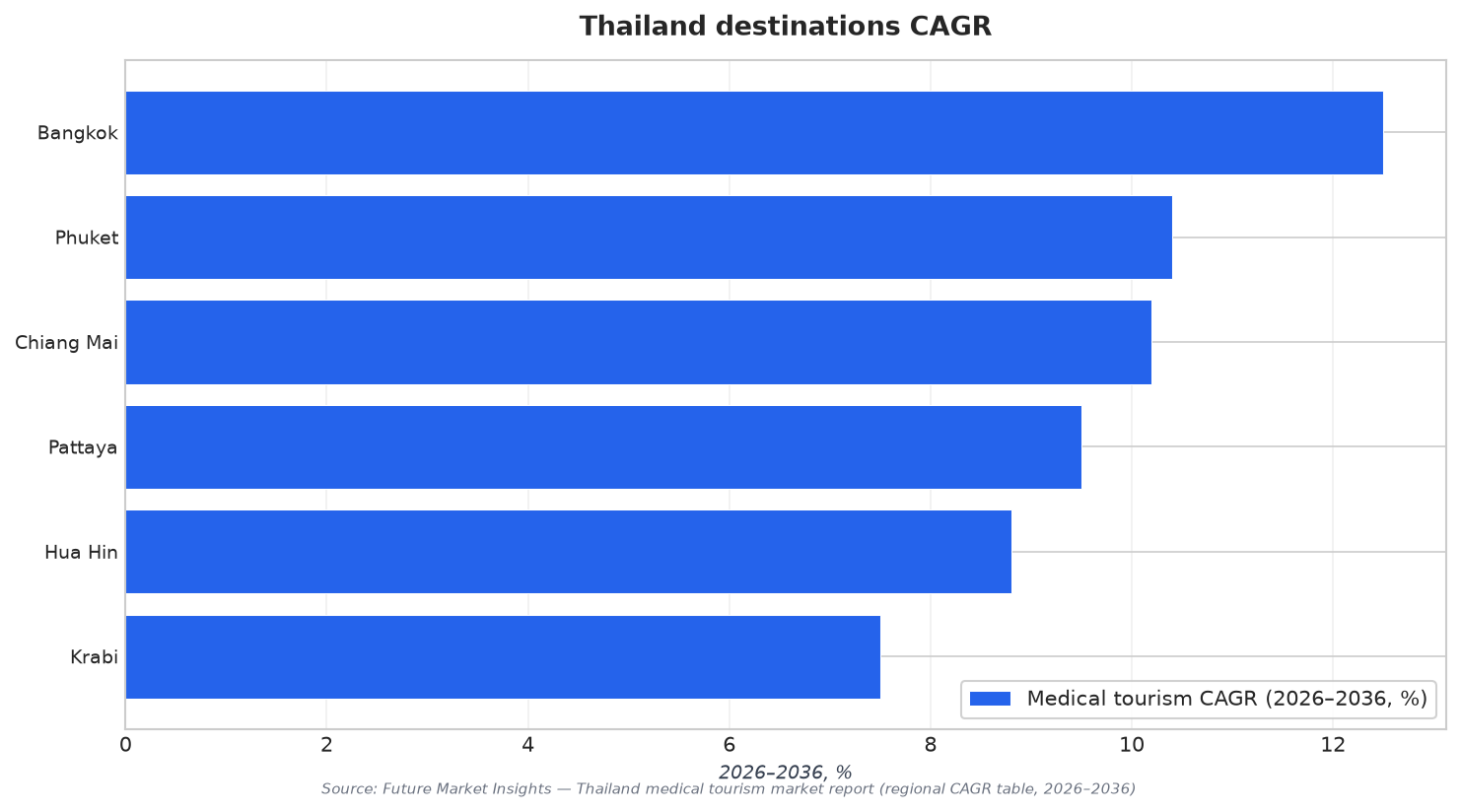
Thailand’s internal destination mix also indicates where medical travel activity can cluster, which is relevant for fertility travelers planning logistics and follow-up visits. A Thailand medical tourism outlook breaks out forecast CAGRs (2026 to 2036) across major destinations: Bangkok at 12.5%, Phuket at 10.4%, Chiang Mai at 10.2%, Pattaya at 9.5%, Hua Hin at 8.8%, and Krabi at 7.5%. For IVF and related reproductive care, these growth expectations suggest that established hubs—especially Bangkok—are likely to keep attracting investment, facilitators, and patients. In parallel, the global medical tourism ecosystem is increasingly organized by private players; one medical tourism market view states private service providers held 74.10% share in 2025, highlighting the role of facilitators and hospitals in packaging travel and care.
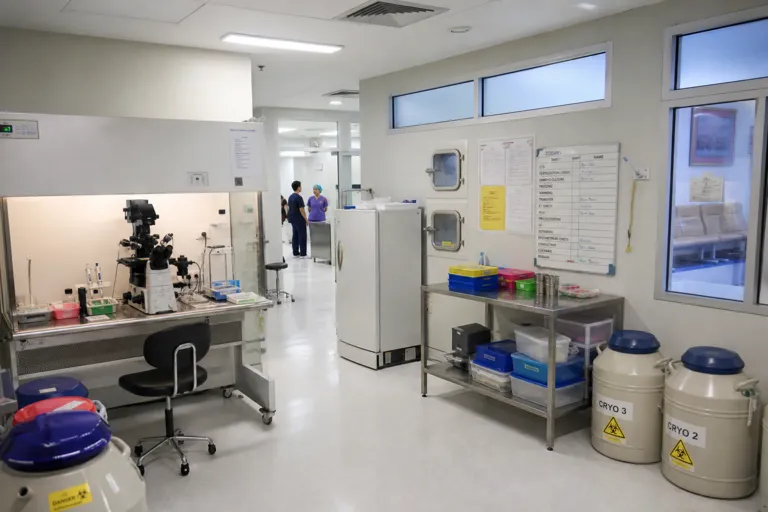
Advanced reproductive care is also evolving in ways that make cross-border fertility treatment easier to initiate and manage. A fertility tourism outlook highlights trends such as digital consultation and remote diagnostics, plus increasing reliance on AI-driven embryo selection and reproductive analytics for personalized IVF protocols. These tools can reduce friction for international patients who want to start consultations from home before traveling, and they can support continuity of care after procedures. Finally, Thailand’s fertility narrative sits inside broader fertility-market momentum: a fertility market report notes assisted reproductive technology (ART) held a 70.97% share in 2024, and fertility clinics held 65.62% of market revenue share in 2024. Together, these signals reinforce why the Thailand fertility tourism market is being discussed as a growth area built on permissive access pathways and increasingly sophisticated reproductive services.
What is fertility tourism, and why do patients travel for IVF?
How fast is the global fertility tourism market expected to grow?
How big is fertility care within global medical tourism demand?
Which Thailand destinations show stronger medical tourism growth outlooks?
What is driving momentum in the Thailand fertility tourism market?