
The Bangkok condominium market is facing mounting pressure from several directions at once. Cushman & Wakefield Thailand’s Surachet Kongcheep said the challenge in the third quarter of 2026 went beyond the usual competition on location and price. Economic weakness has weighed on domestic purchasing power, while foreign demand, especially from Chinese customers, has not recovered. Heavy rain and flooding have added uncertainty for both buyers and developers, prompting some firms to postpone project launches planned for late September while they reassessed conditions.
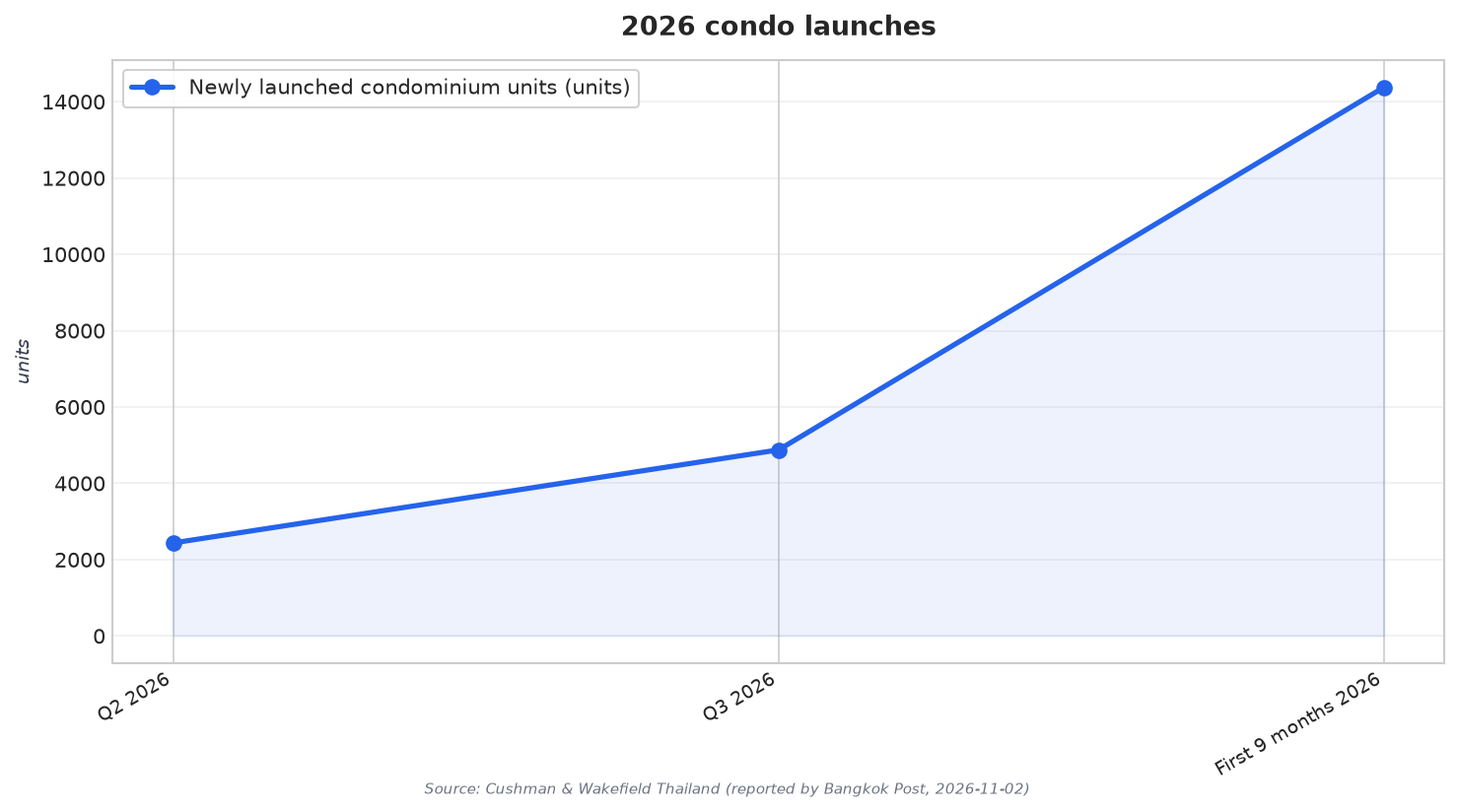
Despite the cautious mood, new supply kept coming. Bangkok recorded 4,876 newly launched condominium units in the third quarter of 2026, nearly double the previous quarter. That brought total launches in the first nine months of 2026 to 14,377 units, up 6% year-on-year. With several projects scheduled for the fourth quarter, full-year launches were expected at around 16,000 to 17,000 units, broadly similar to last year. However, Surachet warned that rising launches do not mean a full market recovery; the key question is whether supply can convert into sales and completed ownership transfers while buyers remain careful with spending.
Inventory Is the Core Problem, Not Just New Launches
The bigger weight on the market is the backlog. Bangkok had more than 65,300 unsold condominium units with a combined value of 370 billion baht, including about 25,700 completed units awaiting buyers. Price positioning shows where the strain is concentrated. Units priced below 3 million baht account for around 55% of the unsold supply, and the share rises to approximately 76% when condominiums priced at 100,001–150,000 baht per square metre are included. Surachet said that even though these brackets target a broad pool of buyers, mortgage rejection remains a hurdle to completing transfers.
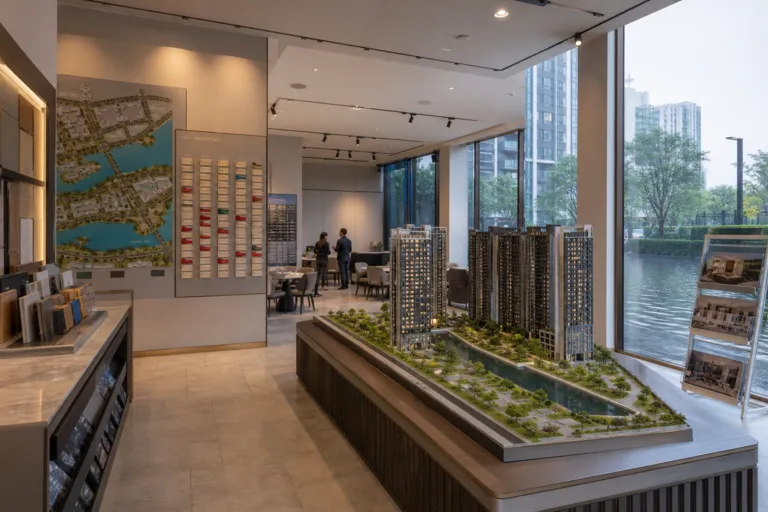
Developers are adapting tactics to generate revenue without letting inventory build further. Some projects have shifted to “soft launches”, allowing selected customers to reserve units ahead of a formal fourth-quarter launch in order to test demand. Others are reducing project sizes, choosing developments with fewer units, or even completing construction before putting units on the market. A further response has been “rent-first” schemes, where customers can move in before applying for a home loan when their finances improve. The strategic emphasis is increasingly on selling completed units ready for transfer or projects scheduled for completion this year.
Location strategy is also tightening. Bangkok’s expanding urban rail network remains a key factor in where condominiums are developed, but developers are concentrating more on routes already in operation and areas with established demand, rather than betting on lines still under construction. Outer Bangkok continues to absorb projects because prices are more accessible and the potential customer base is wider than in the city centre, yet weaker purchasing power is reshaping investment decisions. Flooding adds another dimension: condominiums may be less exposed to direct water damage than houses, but access roads, utilities, and ground-level parking remain vulnerable, making flood preparedness and service continuity more important to buyers.
How large is Bangkok’s current unsold condominium inventory?
What happened to new condo launches in 2026 despite weak demand?
Which price segments make up most of the unsold supply?
How are floods influencing developer and buyer decisions?
What is shaping the Bangkok condominium market’s near-term sales strategy?