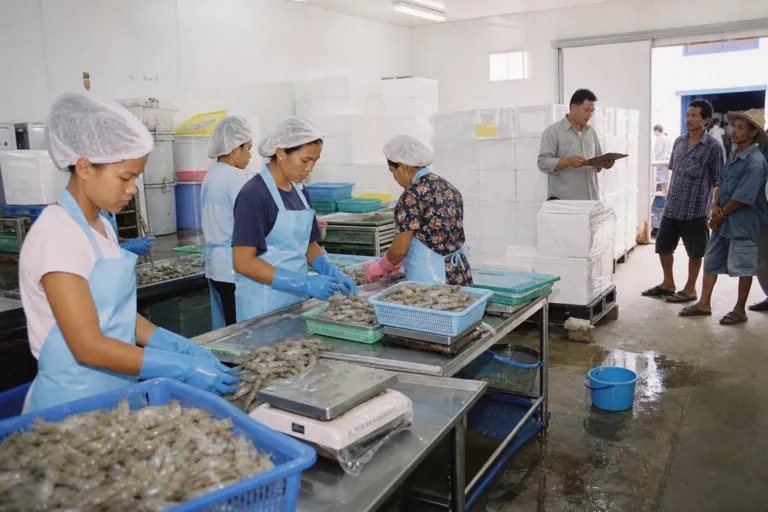
Thailand’s shrimp sector has entered a high-pressure stretch after Malaysia introduced a temporary ban on 1 June covering five shrimp and prawn varieties. Channel News Asia reported Malaysia cited food-safety controls, and the dispute unfolded alongside tightened import requirements for Thai sea bass. In the middle of that shock, the Thai Shrimp Association’s president, Ekapoj Yodpinit, said the industry is at its “lowest point.” The strain is not only about one market. South China Morning Post reported the fisheries sector has also been hit by increased competition, tariffs, shrimp disease, rising feed and fuel costs, and reduced catch.
The Malaysia link is unusually direct for farmers and traders in Thailand’s south. The Thai Shrimp Association said Malaysia imports around 10,000 tonnes of Thai shrimp each year, much of it sourced from the southern provinces due to proximity to the border and local fishing industries. South China Morning Post added that, in Songkhla, some 30 tonnes of fresh shrimp are normally exported daily across the border. When rumors of a suspension circulated in mid-May, farm-gate prices fell by as much as 30 baht (90 US cents) per kilogram, according to a shrimp farm owner cited in the report. With shrimp unable to sit in a warehouse, the sudden uncertainty quickly turned into forced selling.
Trade Pressure Meets a Fast Pivot Strategy
Thailand’s response has been to combine diplomacy with a practical push to reroute product. SeafoodSource reported Thai officials said they were formally notified on 28 May, only three days before the ban took effect, leaving little time for clarifications. Deputy Prime Minister and Commerce Minister Suphajee Suthumpun said Thailand is prepared to raise the issue in ASEAN and at the WTO, while regulators prepare urgent talks with Malaysian counterparts. To limit near-term disruption, the Commerce Ministry ordered agencies to execute a 13-point contingency plan aimed at finding new buyers for at least 400 metric tons of shrimp each month, helping offset the immediate gap left by Malaysia.
Ministry statistics cited by SeafoodSource show Thailand has exported 300 to 400 metric tons of shrimp per month to Malaysia so far this year, generating about THB 44 million (USD 1.34 million, EUR 1.16 million). The Nation reported the same monthly range and value, and said the ministry’s 13 urgent measures target absorbing around 400 tonnes a month. Those actions include marketing Thai seafood at global trade expos, match-making events, and promotion at SIAL in Paris later this year, plus upcoming trade fairs in China and online networking sessions. At home, officials aim to increase domestic movement through the “Aroi Rim Lay” seafood festival in Phuket and by diverting stocks into tourism provinces including Phuket, Krabi, and Trang.
For farmers, the core risk is that blocked exports can turn into a sudden domestic glut. Channel News Asia reported sellers in Thailand are watching prices nervously because if shrimp typically shipped to Malaysia is redirected into Thailand’s domestic market, the increased supply could put pressure on prices and profits. In that context, the Thailand shrimp export industry is fighting back by trying to keep product flowing—either into replacement export channels or into domestic tourism-driven demand—while officials pursue negotiations and keep WTO escalation on the table if the impasse persists. The ban is also intertwined with the prior sea bass dispute and added testing requirements, which The Nation described as creating hidden costs such as lab fees and waiting times for results.
What exactly did Malaysia ban starting 1 June?
How much Thai shrimp typically goes to Malaysia?
What happened to prices when the suspension rumors spread?
How is the Thailand shrimp export industry responding in the short term?
Will Thailand take the dispute beyond bilateral talks?