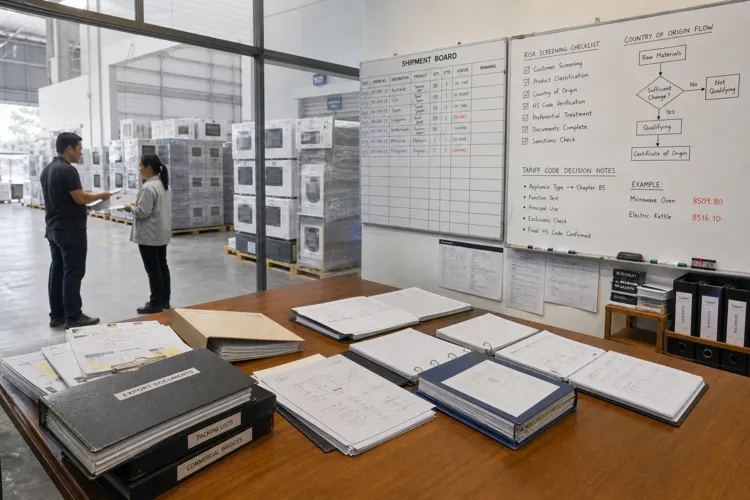
Thailand’s plastic products manufacturers are confronting a new layer of US trade friction at the same time that cheaper regional supply is squeezing prices. The United States announced an additional 12.5% import tariff on most goods from Thailand under Section 301, tied to concerns over measures to prevent imports of goods produced with forced labour. Reporting on the policy notes that plastic pellets and plastic products are among Thai items in scope, even as some exports are excluded because they are already subject to other US measures. For affected firms, the immediate operational burden is tactical but time-consuming: verify product codes, prepare documentation, and strengthen proof that Thai supply chains meet international labour and compliance standards.
Tariff mechanics also matter for pricing and customer negotiations. A tariff-rate reference page states that most Thailand-origin products carry an additional 12.5% Section 301 duty effective July 24, 2026, on top of the HTS general rate for the product’s classification, with exemptions that are code-specific. A separate tariff overview for plastics and rubber under HTS chapters 39–40 lists a 4% base rate and says that, as of 2026-09-14, US import tariffs on plastics and rubber range from about 10% to 41.5% depending on the country of origin. In that same overview, China-origin goods can reach 41.5%. For Thai suppliers selling into the US, this kind of range shifts conversations away from list prices and toward landed cost, HTS classification, and whether a shipment falls into an exemption bucket.
Cheap Imports and Oversupply Add Pressure at Home
While exporters weigh US duty exposure, domestic and regional competition is intensifying. A Thailand plastics market report estimates market size at 6.43 million tons in 2026, rising at a 3.27% CAGR to 7.56 million tons by 2031. The same source says China is bringing nearly 5 million tons of additional polyethylene capacity online each year, pushing surplus volumes into Southeast Asia at discounted prices, and notes that spot HDPE film assessments have slipped to multi-year lows. That combination—more material chasing demand and cheaper alternatives—can compress converter margins, especially when buyers can benchmark against discounted imports.
Trade scrutiny is also broadening beyond a single measure. One report says Thailand is on the US Trade Representative’s investigation list in two areas: forced labour and excess production capacity. It adds that each issue carries a potential 12.5% tariff, and that tariffs imposed under Section 301 have no clear expiration date. The same reporting warns that if Thailand were hit under both Section 301 issues, the total additional tariff could reach 25%—12.5% from the forced labour case and another 12.5% from the excess capacity case. It also flags plastics among other products under watch, reinforcing why traceability, origin documentation, and upstream sourcing decisions now affect commercial risk.
These overlapping pressures are reshaping decisions inside the Thailand plastic products industry, from procurement to compliance to market targeting. Thailand’s Commerce Minister has sought an effective ceiling of about 19% on overall US tariff exposure, but another report says Washington has not guaranteed such a limit and that additional Section 301 duties could be imposed independently. In parallel, the plastics market report says more than 800 mid- and large-size manufacturers are integrating digital ordering tools and low-carbon processes, suggesting a push to defend customer relationships and specifications even as energy inflation and cheap Chinese imports squeeze margins. For many firms, resilience now looks like better paperwork, clearer origin chains, and sharper product positioning rather than volume alone.
What is the new US Section 301 duty rate applied to most Thailand-origin goods?
Which Thai plastic-related exports are mentioned as being in scope of the US action?
How does Chinese oversupply affect competition for Thai plastic manufacturers?
How big is Thailand’s plastics market in the mid-2020s according to the sources?
What risks are shaping the Thailand plastic products industry right now?