Thailand’s technology buyers are modernizing legacy systems and shifting budgets toward cloud platforms, artificial intelligence, data analytics, and connected technologies, according to a Thailand ICT market outlook covering 2026–2031. This demand shows up clearly in market mix. In 2025, IT services held the largest share of Thailand’s ICT market at 32.08%, supported by managed services agreements, IT outsourcing, and multi-cloud migration projects. In practice, this pulls systems integrators and service providers into the center of enterprise programs, because migration planning, implementation support, and compliance work often determine whether AI and cloud roadmaps stay on track.
Large organizations are driving much of this shift. Large enterprises represented 59.25% of Thailand’s ICT market size in 2025, reflecting established IT budgets and transformation roadmaps. Public-sector policy also shapes enterprise buying behavior. Since 2024, every public-sector agency must justify on-premises procurements as exceptions, pushing ministries toward domestic cloud regions certified under ISO 27001 and aligned with the Personal Data Protection Act. Under the THB 15 billion (USD 0.47 billion) Smart Nation Smart Life program, Thailand is funding shared API gateways and a sovereign large-language-model platform called ThaiLLM hosted in government-approved clouds.
Outsourcing Demand Rises With Cloud Security and Data Center Needs
As cloud programs scale, security requirements can become an outsourcing catalyst rather than a blocker. A Thailand IT and Security market analysis reports that professional services reached THB 2.1 billion (USD 60 million) in 2025, following the National Cyber Security Agency’s quarterly audit mandate. The same source describes services as the fastest-moving segment, projected to rise at a 10.71% CAGR to 2031, as enterprises outsource vulnerability assessments, penetration tests, and managed detection and response to local specialists. It also highlights a 30,000-person workforce gap identified by the National Cyber Security Agency, which can push some organizations toward managed models when internal hiring cannot keep pace.
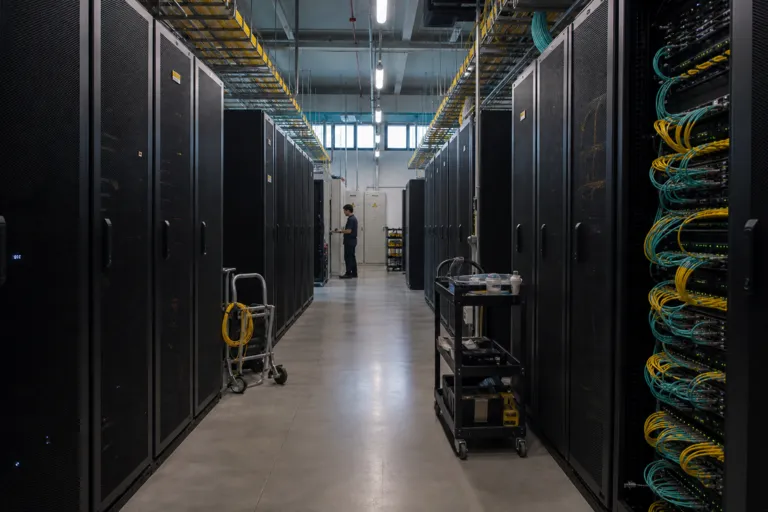
Cloud migration also changes what enterprises outsource in infrastructure operations. In Thailand’s data center outsourcing segment, Market Research Community estimates the market at USD 684.0 million in 2025, forecasting growth to USD 1.37 billion by 2032 at a 10.4% CAGR for 2026–2032. The report links this outlook to accelerating enterprise AI adoption, cloud migration, and heightened cybersecurity spending. For vendors, this combination creates bundled opportunities: migration execution, modernization of core applications, and ongoing outsourced operations that keep workloads stable as usage expands.
Enterprise AI adds another layer to how the Thailand IT services market evolves, because compute choices and delivery models influence project scope and sourcing. A Thailand AI infrastructure study notes that Cloud AI Infrastructure has a dominant share, tied to rapid enterprise movement toward AI-as-a-service platforms, hyperscale GPU cluster deployments, scalable compute accessibility, and reduced capital expenditure requirements. Meanwhile, within Thailand’s ICT outlook, cloud services are forecast to grow at an 11.45% CAGR as enterprises refactor monolithic applications into API-driven microservices. Together, these trends point to a service-led cycle: planning and refactoring work creates demand for migration specialists, while AI-ready cloud infrastructure strengthens the case for ongoing managed services.
What share did IT services hold in Thailand’s ICT market in 2025?
How important are large enterprises to Thailand’s ICT demand?
What is driving demand for outsourced security services in Thailand?
How big is Thailand’s data center outsourcing market, and what is its growth outlook?
What does the Thailand IT services market signal about enterprise AI and cloud migration priorities?