
Thailand’s pharmaceutical market was valued at USD 9.6 billion in 2025 and is forecast to reach USD 17.2 billion by 2033, with an expected CAGR of 7.6% from 2026 to 2033. That expansion matters for payers because rising healthcare needs and chronic diseases, including diabetes, cardiovascular diseases, and cancer, are linked to higher use of prescription medicines, biologics, and specialty drugs. In 2025, conventional small-molecule drugs were still the largest revenue-generating category, and they held a 57.29% revenue share in the small-molecule segment. But the molecule mix is shifting toward therapies that are often more expensive to fund.
Against that backdrop, the Thailand biosimilars market is increasingly framed as a practical payer response to costly biologic therapies in oncology and specialty care. Thailand-focused industry outlooks describe biologics and biosimilars as the faster-growth opportunity within the country’s market trajectory, even while multinationals continue to influence competition through import and distribution. The growth logic is straightforward: as demand rises for advanced therapies used in chronic and complex diseases, payers and health systems have stronger incentives to support lower-cost therapeutic alternatives where regulatory pathways allow clinically comparable products to compete.
Regulation and Local Manufacturing Signals Support Adoption
Thailand has had formal biosimilar guidelines since 2013, aligned with WHO standards and ASEAN harmonisation frameworks. Registration documentation follows either the ASEAN Common Technical Dossier (ACTD) or the ICH Common Technical Document (ICH CTD) format. The Thai FDA’s requirements for biologics registration are aligned with WHO standards, and biosimilar approval requires comparability data, including preclinical and clinical evidence, consistent with what international regulators expect. This regulatory structure is an important enabler for payer confidence, because it focuses on demonstrating no clinically meaningful differences versus the reference product.
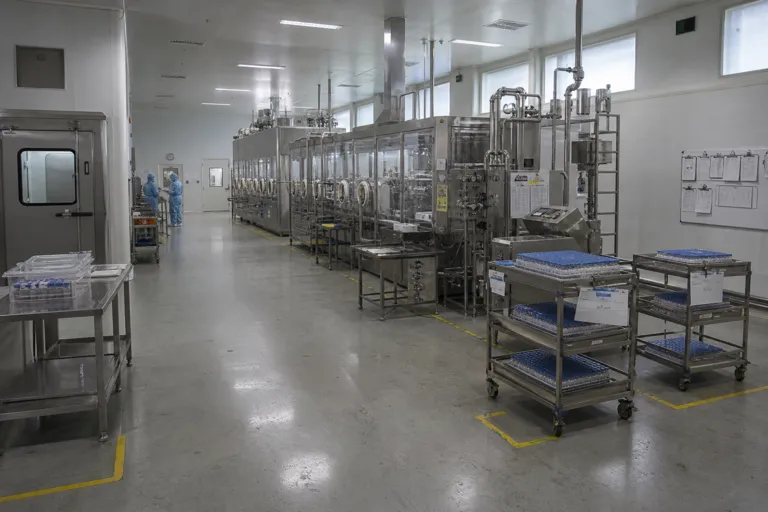
Manufacturing capability also shapes the pace of biosimilar traction. State-affiliated producers include the Government Pharmaceutical Organization (GPO), which manufactures essential medicines and vaccines and, through Siam Bioscience, produces biologics for domestic use. Siam Bioscience is described as Thailand’s most advanced biologics manufacturer and the most visible example of the country’s ambitions in biosimilar production. While generics remain the backbone of domestic pharmaceutical manufacturing, Thailand also has a defined complex-injectables niche: the specialty injectable generics market is valued at USD 1.0 billion, and it is being shaped by oncology use in hospitals alongside growing activity in autoimmune, inflammatory, and infectious diseases, including HIV and hepatitis.
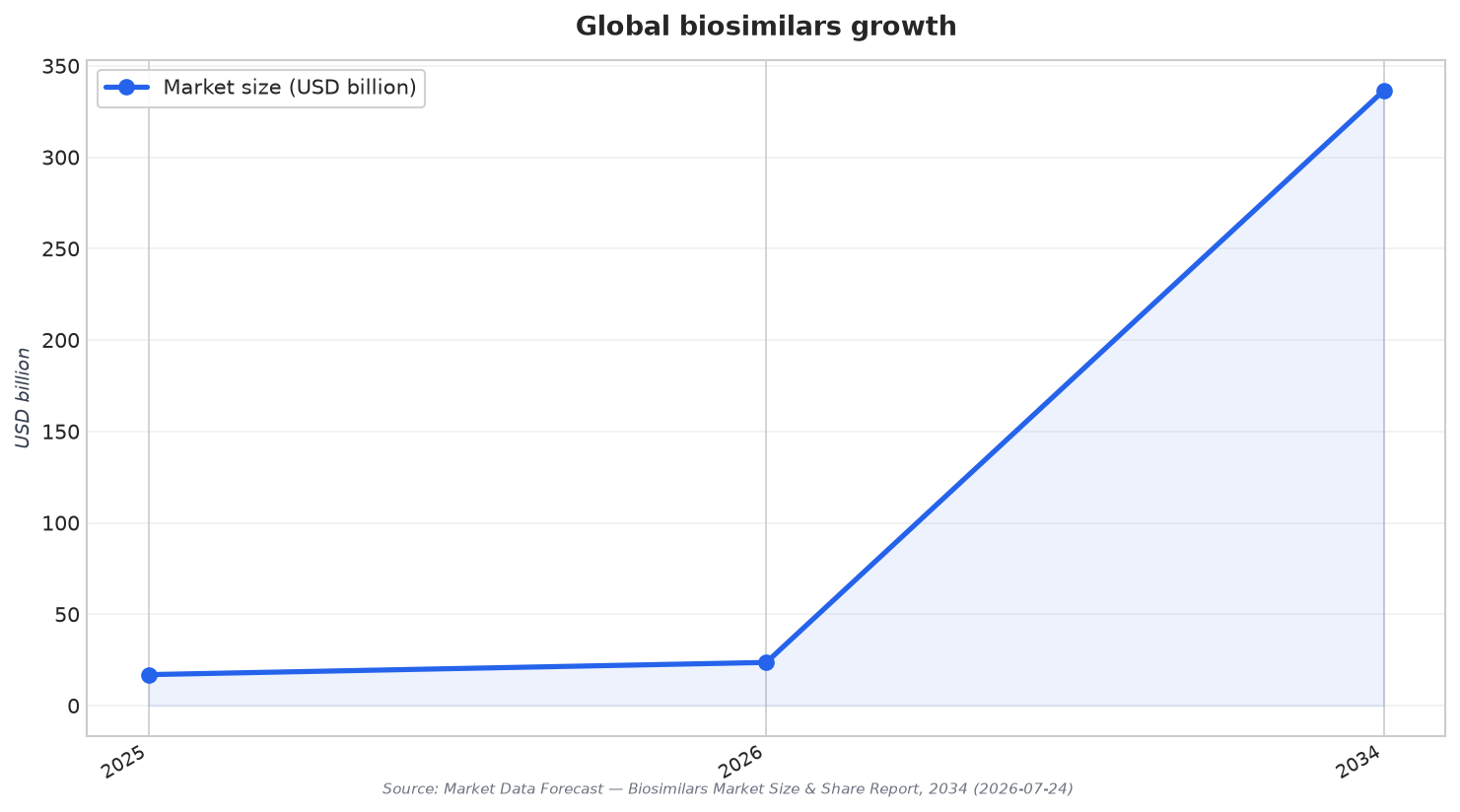
Global market signals reinforce why payers focus on biosimilars as a cost lever, while also clarifying what is local versus contextual. One global forecast values the biosimilars market at USD 16.94 billion in 2025, estimates USD 23.61 billion in 2026, and projects USD 336.43 billion by 2034, implying a 39.39% CAGR from 2026 to 2034. Another global analysis puts the market at USD 34.3 billion in 2025 and projects USD 94.4 billion by 2033, at a 13.5% CAGR, while Kings Research estimates USD 37.88 billion in 2025 and USD 133.08 billion by 2033 at a 17.01% CAGR. Separately, Southeast Asia is described as the fastest-growing region, with Thailand cited among countries creating growth opportunities as healthcare access expands and demand increases for treatments in cancer, autoimmune disorders, and inflammatory diseases.
How is Thailand’s pharmaceutical market trending through 2033?
What rules govern biosimilar approvals in Thailand?
Which local organizations are highlighted for biologics production in Thailand?
What does the specialty injectable generics segment look like in Thailand?
What is driving momentum in the Thailand biosimilars market?