
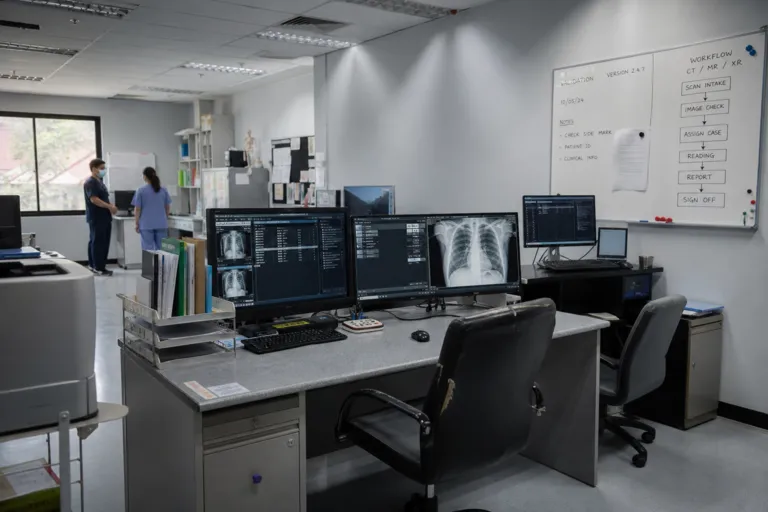
Thailand’s hospital AI conversation is changing from experimentation to day-to-day operations. At a discussion among leaders from Bangkok’s leading hospitals, the mood was candid about what is working and what still fails, including “pilotitis” and internal resistance to change. Prof Eric Wong of NHG Health in Singapore described pilotitis as a pattern where organisations run “300 to 400 IT and AI projects a year” without delivering value at scale, then argued for an enterprise approach that pairs technology with workflow redesign. In his example of chest X-ray AI, he said radiologists needed explicit instructions: if AI reads the image as normal, the patient should go home rather than waiting two hours for a second check that adds nothing.
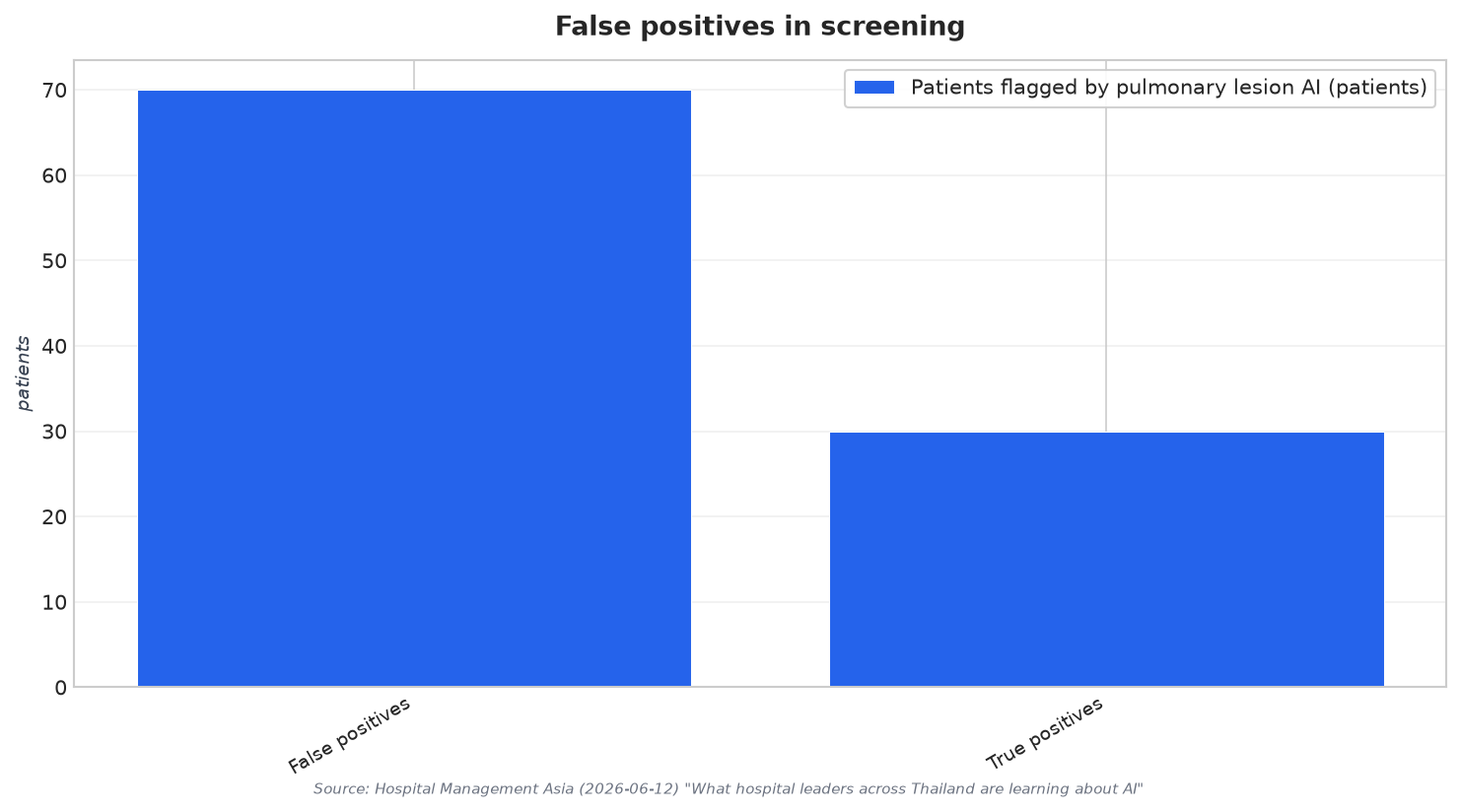
In Thailand, the scaling challenge also shows up in how many ideas hit decision-makers at once. Dr Wansa Paoin, President of the Thai Medical Informatics Association, said Thailand is “awash” with AI product pitches, and at least 100 AI projects have been proposed to departments within the Ministry of Public Health alone. He warned that prioritisation breaks down when “everyone says ‘I will do AI.’” He also highlighted clinical risk from weak validation: in late 2024, an AI screening tool for pulmonary lesions flagged 100 Thai patients as potential early-stage cancer or tuberculosis cases, but after full investigation 70 were false positives, creating avoidable invasive tests, expense, and anxiety. His point was simple: hospitals must be careful about accountability when AI is involved.
From Diagnostics to Workflow: Where Deployment Is Landing
Deployment is increasingly tied to real operational use cases, not just demos. A Thailand hospital network case study described AI-assisted diagnostics introduced first in pilot departments such as radiology and oncology, alongside an integrated electronic health record system to enable real-time data sharing. Machine learning was used to predict patient influx and optimize staff scheduling, while chatbots handled routine patient inquiries and triage to reduce burden on staff. The same case study reported that diagnostic accuracy in pilot departments improved markedly, including earlier detection of certain cancers, and that average patient waiting times dropped as predictive scheduling balanced supply and demand for medical staff. This is the core shift now: connecting clinical AI to throughput, staffing, and patient experience.
Policy ambitions and demographics are also shaping what “production AI” means in practice. One report framed Thailand’s strategy as moving away from reactive care toward predictive healthcare analytics, with a national goal of becoming a central medical hub for Southeast Asia by the end of 2026. It also stated that Thailand has entered a super-aged society, with more than 20% of the population now over age 60, increasing demand for monitoring and chronic care. Another report described pilots where AI supported notes and schedules so clinicians could focus on patients, with workloads easing by 30% in pilots, alongside fewer errors. It also said Thailand’s 2026 “Green Lane” would slash AI diagnostic approvals by 50% for low-risk software, with local data security rules.
Local data quality is repeatedly positioned as the make-or-break factor for safety and performance. The Nation highlighted an example where an AI system developed and approved in Japan recorded an error rate as high as 23% when deployed in Taiwan, attributed to differences in training data. Thai leaders argue Thailand can build differentiated datasets because its healthcare system serves a diverse population, including Thais and foreign patients. Market signals also suggest sustained investment interest, particularly beyond hospitals into payers: Grand View Research estimated Thailand’s AI for healthcare payer market generated USD 14.9 million in 2023 and is expected to reach USD 40.8 million by 2030, at a 15.5% CAGR from 2024 to 2030, with software at a 57.72% revenue share in 2023. Together, these signals point to Thailand AI in healthcare moving toward governed, scaled deployments rather than endless pilots.
What is “pilotitis,” and why does it slow hospital AI adoption?
What real-world risk did Thailand see from a poorly validated AI screening tool?
How is AI being used beyond diagnostics in Thai hospitals?
What does Thailand’s “Green Lane” mean for AI diagnostics approvals?
What market figures are available for Thailand AI in healthcare on the payer side?