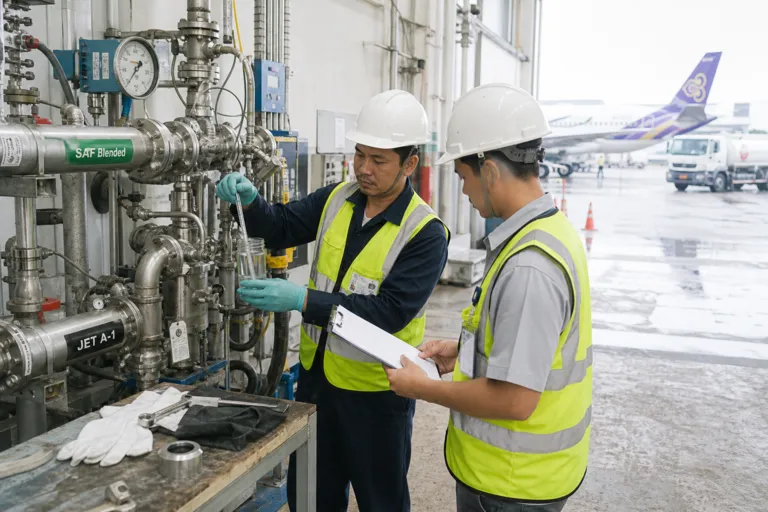
Thailand’s sustainable aviation fuel industry is shifting from early projects to a rule-based market. The Department of Energy Business is preparing to introduce new SAF standards and to make blending mandatory in jet fuel from 2026. The regulations are set to come into force on January 1, 2026. Under the framework, Jet A-1 fuel specifications and quality requirements at both production and sale stages will be split into three categories: conventional Jet A-1 fuel, fuel produced through co-hydroprocessing, and conventional Jet A-1 blended with pure SAF. The department has also defined standards for SAF itself, aiming to ensure SAF produced and supplied in Thailand meets recognised international standards.
In this first phase, Thailand’s rules limit SAF production to HEFA (Hydroprocessed Esters and Fatty Acids) technology. Feedstocks and production processes must comply with ASTM D7566 norms. Officials have framed this as a practical step, since Alcohol-to-Jet technology using ethanol is still under development and has not yet reached full commercial scale. The policy also aligns with ICAO efforts to encourage airlines worldwide to adopt SAF to reduce aviation emissions. Globally, aviation is responsible for approximately 2% of total carbon dioxide emissions and accounts for 12% of emissions from the transportation sector, underscoring why standards, traceability, and fuel quality are central to adoption.
Projects, Blending Timelines, and the Commercial Supply Base
Thailand already has projects that can anchor early supply as blending begins. Bangchak Corporation is building a HEFA SAF plant using used cooking oil as the primary feedstock. The project is designed for one million litres per day, or about 6,289 barrels per day, and is expected to be completed and begin commercial operations in the second quarter of 2026. PTT Global Chemical (GC) is producing SAF using co-processing HEFA technology, also based on used cooking oil, and the project is already operating commercially with an initial capacity of 16,438 litres per day, or about 103 barrels per day. These volumes matter because mandated blending creates predictable demand that can support ramp-up.
Thailand’s first SAF standard has been reported as expected to be released and enforced with blending that starts at 1% and increases to 8% by 2036. The move is positioned to decarbonize aviation in line with international measures and to support Thailand’s goal of achieving carbon neutrality by 2050. For comparison, the European Union has enforced mandatory SAF blending for flights departing from EU airports, with a 2% blending requirement in place since 2025. These policy signals matter in a market that is still scaling globally, where SAF can be blended with conventional fuels at levels ranging from 10% to 50% depending on production method and feedstock.
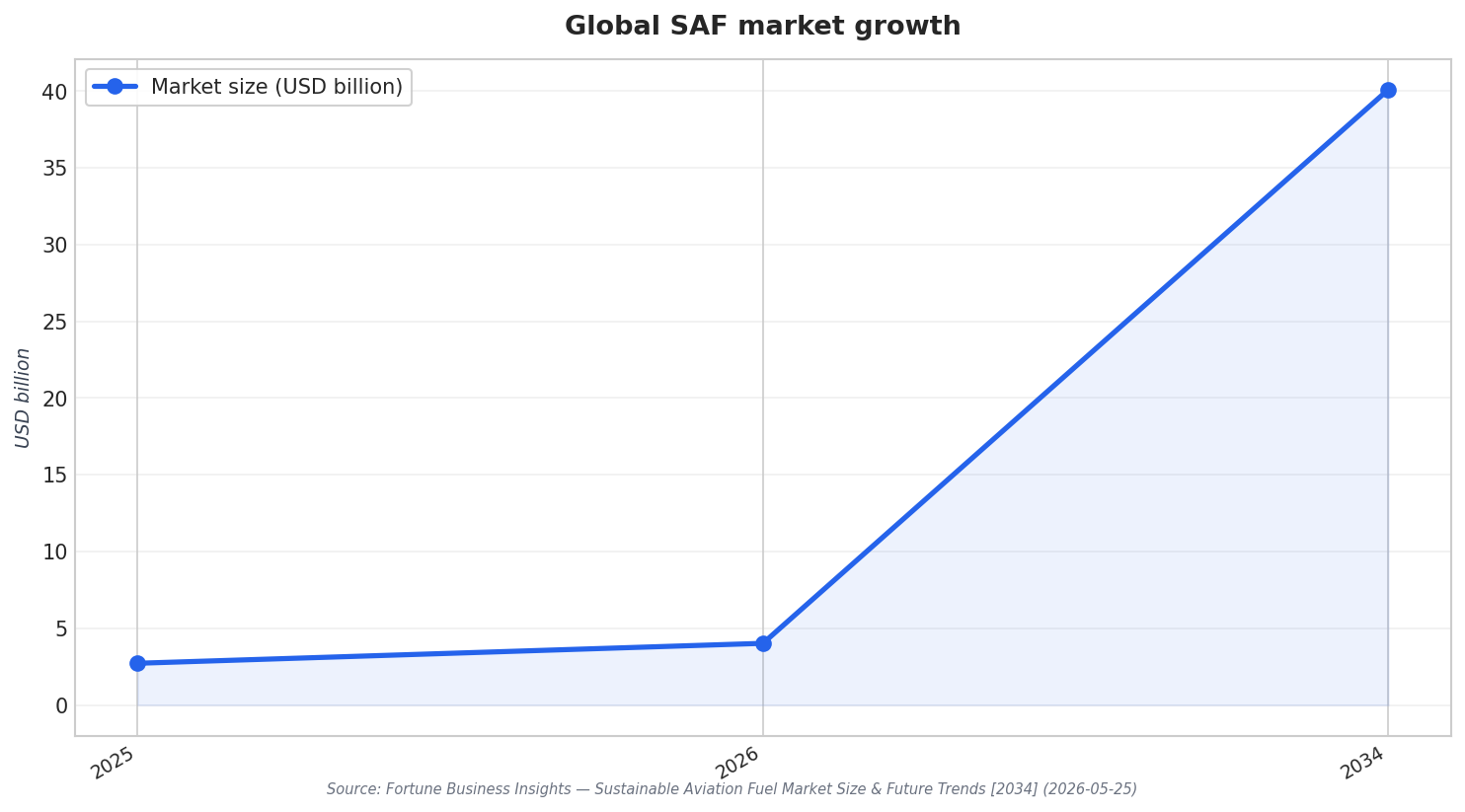
Broader market indicators highlight why Thailand’s direction is attracting attention, even as local production ramps up in stages. Fortune Business Insights valued the global SAF market at USD 2.72 billion in 2025 and projected growth from USD 4.02 billion in 2026 to USD 40.09 billion by 2034, with a CAGR of 33.3%. In Asia-Pacific, BIS Research estimated the SAF market could reach $39.23 billion by 2033 from $0.38 billion in 2023, at a growth rate of 58.99% over 2023–2033. Regional supply potential is also being discussed: an ASEAN outlook cited SAF feedstocks such as used cooking oil, rice waste, cassava waste, and forestry residues, and noted HEFA is the most prevalent technology for producing SAF today, costing about twice as much as jet fuel, with feedstock the largest cost contributor.
When do Thailand’s new SAF standards take effect?
Which SAF technology is Thailand focusing on first?
What production capacity is planned for Bangchak’s SAF plant?
How does Thailand’s blending plan compare with the EU?
What is driving Thailand’s sustainable aviation fuel push?