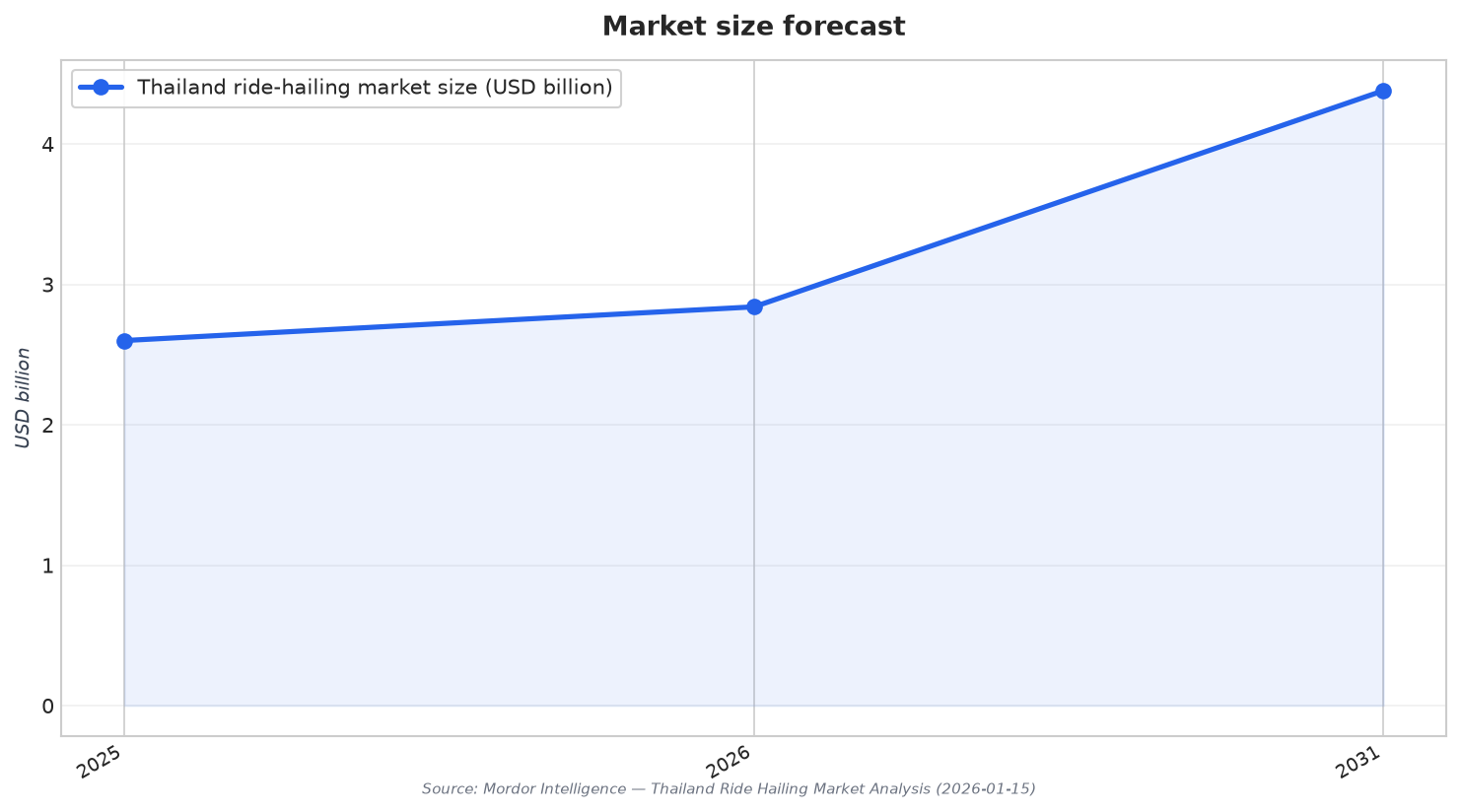
Momentum in Thailand’s ride-hailing market is increasingly being shaped by two forces at once: a clearer legal framework and intense competition between super-app ecosystems. Mordor Intelligence estimates the market will grow from USD 2.60 billion in 2025 to USD 2.84 billion in 2026, with a forecast to reach USD 4.38 billion by 2031 at a 9.08% CAGR over 2026-2031. A separate view from Verified Market Research values the market at USD 3.4 billion in 2024 and projects USD 8.9 billion by 2032, at a 12.8% CAGR from 2026 to 2032. These forecasts reflect the same direction: platforms are pushing for higher ride frequency, broader coverage, and tighter integration with payments and other daily services.
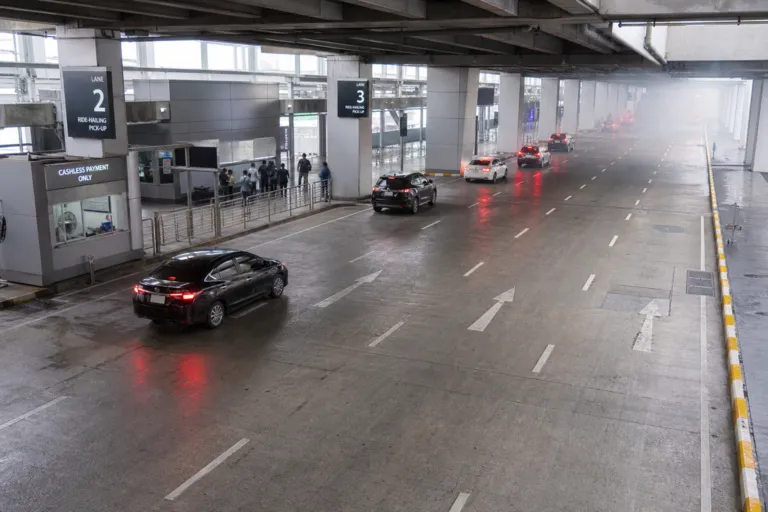
Legalization and compliance requirements are becoming operational differentiators, not background noise. Brineweb states that Thailand formally legalised app-based ride-hailing in 2021, and that a comprehensive regulatory framework was introduced in October 2025. Under Electronic Transactions Development Agency (ETDA) rules issued under Article 18(3) of the 2022 Royal Decree on digital platform business operations, platforms are no longer treated as neutral intermediaries and are treated as active regulators and supervisors of their driver and vehicle networks. Brineweb adds that platforms must channel vehicle numbers, legal fares, driver details, and route plans into the Department of Land Transport (DLT) system in real time, with daily driver facial verification and 24-hour customer support lines also mandated.
Super-Apps, Cashless Checkout, and Where Demand Concentrates
Competition is increasingly about ecosystems, not just price. Mordor Intelligence highlights that cross-service bundling across ride-hailing, food delivery, and financial services deepens retention and increases ride frequency, reinforcing platform “stickiness.” Payment rails are central to that stickiness. Mordor reports that digital wallets led with 68.32% share by payment method in 2025 and are forecast to advance at an 11.06% CAGR to 2031, while online channels controlled 91.85% share by booking type in 2025 and are advancing at a 10.12% CAGR through 2031. The same report notes PromptPay processed 47.42 trillion baht in 2023, underscoring how cashless usage can remove checkout friction for riders and improve payout speed for drivers.
Bangkok remains the core battlefield, but growth is spreading outward through tourism and platform expansion. Mordor Intelligence says the Bangkok Metropolitan region retained 54.71% of market share in 2025, while Northern Thailand is rising at a 9.86% CAGR through 2031. On the trip mix, passenger cars captured 80.62% share in 2025, yet two-wheelers are forecast to expand at a 10.74% CAGR through 2031. End-use data also points to a market that is both routine and increasingly business-linked: personal trips held 67.48% share in 2025, while commercial usage is growing at an 11.58% CAGR. Knowledge Sourcing adds that Chiang Mai’s e-hailing segment is growing, supported by tourism and student populations.
Strategic moves now link regulation, payments, and fleet transitions into a single playbook. MarkWideResearch notes that Thailand’s Department of Land Transport enforces driver registration and vehicle inspection standards that filter platform access, while the Bank of Thailand oversees mobile wallet interoperability that shapes payment adoption across apps. Within the broader region, Mordor’s ASEAN taxi research says Thailand authorized taxi-operated ride-hailing apps in 2024, creating a technology pathway for traditional fleets. Platform competition is also influencing vehicle strategies. Knowledge Sourcing reports that in May 2024, Auto Drive EV announced a strategic partnership with Grab Thailand to launch an “Electric Taxi Rental Project,” enabling traditional taxi and ride-hailing drivers to rent electric taxis for on-demand services through the Grab application.
How fast is Thailand’s ride-hailing market expected to grow through 2031?
What share of rides are booked online in Thailand?
Why are super-apps important in the Thailand ride-hailing market?
Which areas lead demand, and where is growth rising?
What major rule changes affect ride-hailing platforms in Thailand?