Thailand’s mental health services market is expanding alongside public discussion that is reducing stigma and encouraging more help-seeking behavior. IMARC Group estimates the Thailand mental health market size reached USD 18.6 billion in 2025 and expects it to reach USD 38.5 billion by 2034, with a projected CAGR of 8.19% during 2026–2034. The same outlook links momentum to rising awareness of mental wellbeing, government mental health policy reforms, and broader acceptance of therapy and counseling. Demand is also being shaped by a push to make care more accessible and affordable across both urban and rural areas.
Digital delivery is a major practical enabler of this expansion. IMARC notes rapid growth in digital mental health services in Thailand, including smartphone apps and national web portals such as “Tor‑Teum‑Jai,” which is adapted from WHO tools. These platforms provide self-care guidance, stress management, and earlier access to therapy, with support from trained volunteers. In parallel, tele–mental-health services are described as improving access in urban and rural areas, helping expand reach without relying solely on traditional in-person infrastructure. As privacy and on-demand support become more important to users, the mental health apps market in Thailand is described as expanding swiftly.
Digital Therapeutics and Employers: Two Growth Engines
Digital therapeutics and hybrid care models are also widening the channel mix for mental health support in Thailand. Ken Research values the Thailand Digital Therapeutics Market at USD 130 million, tying growth to increasing prevalence of chronic diseases, including mental health disorders, along with rising healthcare costs and greater acceptance of digital health solutions among patients and providers. The same source highlights collaboration between technology companies and healthcare providers as a driver of PDTx and hybrid programs, positioning them as clinically supported and scalable options that enable remote monitoring and data-driven personalization. It also points to demand in regions such as Chiang Mai and Phuket, where urbanization and high smartphone and internet penetration support uptake.
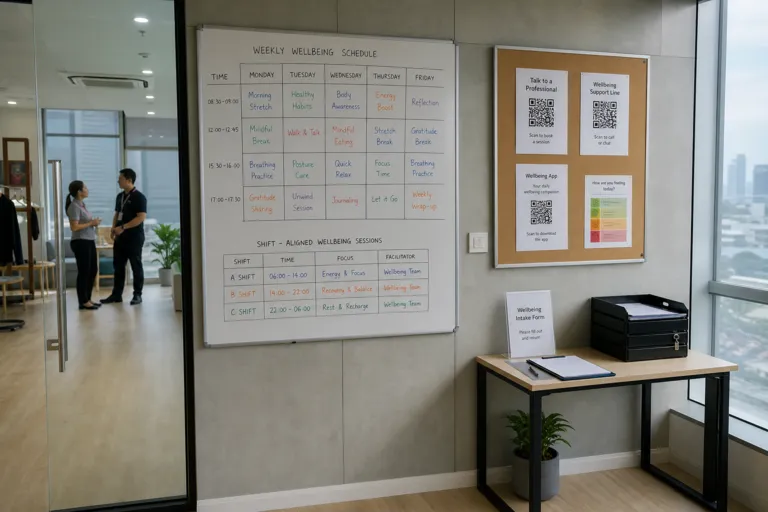
Workplace wellbeing programs are scaling at the same time, adding another layer of demand for services and tools. IMARC identifies workplace wellness programs as an area expanding demand in Thailand, alongside youth-focused interventions. Global market research reinforces why employer channels matter: Mordor Intelligence links increased employer focus on workplace wellness to broader mental health market dynamics, and highlights how disclosure rules can connect executive pay to workforce wellbeing metrics. In that context, it reports per-employee outlays rising 18% to USD 340 in 2025 under IFRS S1 & S2 disclosure rules. While that figure is not Thailand-specific, it helps frame why employers globally are formalizing mental health benefits, a pattern consistent with the workplace momentum IMARC describes in Thailand.
Thailand’s expansion is also happening within a faster-moving global digital mental health environment. Market Research Future projects the global digital mental health market to grow from USD 27.8 billion in 2024 to USD 180.56 billion by 2035, at a CAGR of 18.54% during 2025–2035. The same source cites WHO, noting that over 60% of member states have adopted digital health strategies, and that AI-driven healthcare technologies are being implemented across more than 90 countries. For Thailand, the local implication is clear: the combination of national portals, app-based self-care, tele–mental-health, and emerging digital therapeutics aligns with global product, payment, and adoption trends—supporting the outlook for continued scaling in the years ahead.
How fast is Thailand’s mental health services market expected to grow?
What digital tools are expanding access to mental health support in Thailand?
What is the reported size of Thailand’s digital therapeutics market?
Why are workplace wellbeing programs relevant to market expansion?