EU environmental rules are reshaping what it takes to stay competitive in export supply chains. Thailand’s exporters face material risk in the EU, described as Thailand’s fourth-largest export market, as new requirements land across packaging and carbon. Since 12 August 2026, any Thai exporter shipping packaged goods into the EU has technically fallen under the Packaging and Packaging Waste Regulation (PPWR). In parallel, the Carbon Border Adjustment Mechanism (CBAM) is described as being in its financial phase, with analysis from Krungsri and trade bodies, including the EU-ABC Thailand, flagging rising compliance costs and documentation burdens. The same analysis also points to CBAM exposure expected to widen in scope from 2028, raising the value of traceable, certified electricity procurement for manufacturers that need to prove low-carbon production credentials.
In that context, Thailand’s Utility Green Tariff can function as a practical bridge between corporate demand and verifiable clean power. The first phase, UGT1, launched in February 2025 and allowed corporate consumers to procure renewable electricity via utility-supplied power bundled with renewable energy certificates. That structure matters for exporters because certification and documentation are becoming a core part of market access, not a side project. It also lands during a period of structural change in Thailand’s power system. Installed thermal capacity, dominated by natural-gas plants, accounted for 75.6% of the Thailand power market in 2024, while renewables are forecast to advance at a 5.05% CAGR through 2031, according to Mordor Intelligence’s estimates.
Why Certified Utility-Backed Clean Power Is Rising in Importance
Power-sector momentum and policy direction both reinforce why certified procurement tools are being discussed so actively. Thailand installed nearly 3 GW of solar PV capacity in 2024, increasing cumulative solar capacity to 11.875 GW, and EGAT’s floating-solar roadmap spans nine reservoirs totaling more than 2,700 MW. At the system level, modernization is also being funded: grid modernization outlays are cited at THB 90 billion (approximately USD 2.6 billion) for pumped-storage dams and high-voltage corridors. Against this backdrop, the Thailand utility green tariff is positioned as a mechanism that can stimulate and fund new renewable energy supplies under the upcoming PDP2026, following EGAT’s launch of a Utility Green Tariff platform highlighted in local commentary.
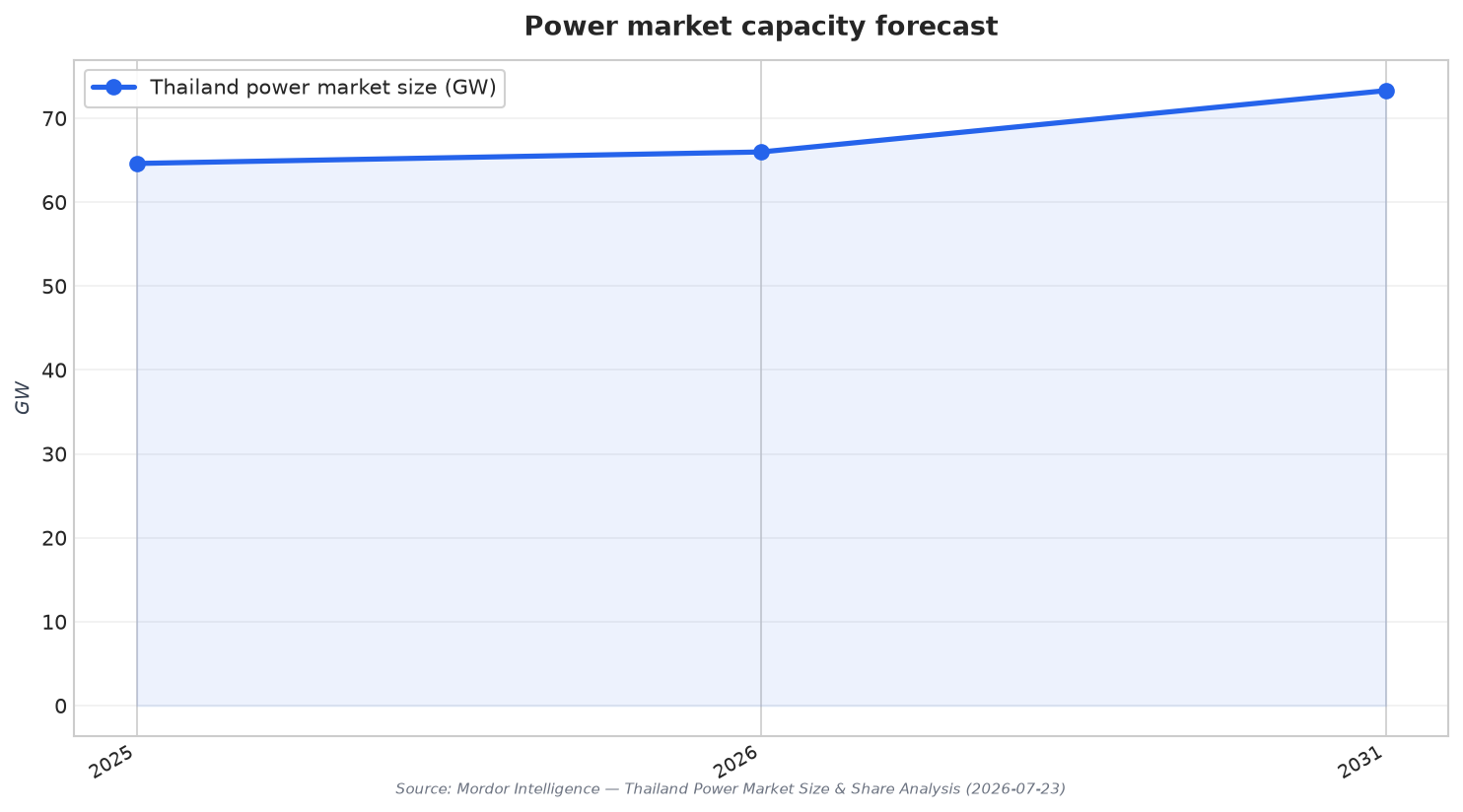
Export-driven industry demand is also expected to climb, and that increases the need for scalable access to clean electricity contracts. Mordor Intelligence projects Thailand’s power market size to grow from 64.61 GW in 2025 to 65.98 GW in 2026, reaching 73.29 GW by 2031 at a 2.12% CAGR (2026–2031). Within demand, utilities captured 42.25% of end-user demand in 2025, while the commercial and industrial segment is projected to expand at a 4.65% CAGR to 2031. Separately, Thailand’s new PDP is described as targeting 60% clean electricity by 2050—50% renewables plus 10% SMR—yet industrial groups argue that procurement reform and access must accompany the headline targets to translate into competitiveness.
Access and allocation are therefore the near-term friction points that exporters should watch. Manufacturers have warned that data centers get priority under the current Utility Green Tariff while established industry waits, underlining that “availability” is not the same as “bankable supply for every factory.” At the same time, broader market signals show how large the clean-power pull could become: a capacity forecast presented at the ESG Symposium 2026 in Bangkok said Thailand’s expanding industrial operations and data centres demand roughly 25,000 MW of clean power, and that renewable electricity generation must rise to between 65% and 80% by 2050. For exporters under PPWR and CBAM pressure, the practical takeaway is to align procurement and documentation early, using certified utility-backed options where possible while monitoring how procurement access evolves.
What does the Utility Green Tariff (UGT1) allow corporate buyers to do in Thailand?
Why are Thai exporters paying closer attention to certified clean power now?
How does Thailand’s power mix and outlook frame the role of utility-backed green procurement?
What scale of clean power demand has been discussed for Thailand’s industry and data centers?
How should exporters think about the Thailand utility green tariff when planning for CBAM-related scrutiny?