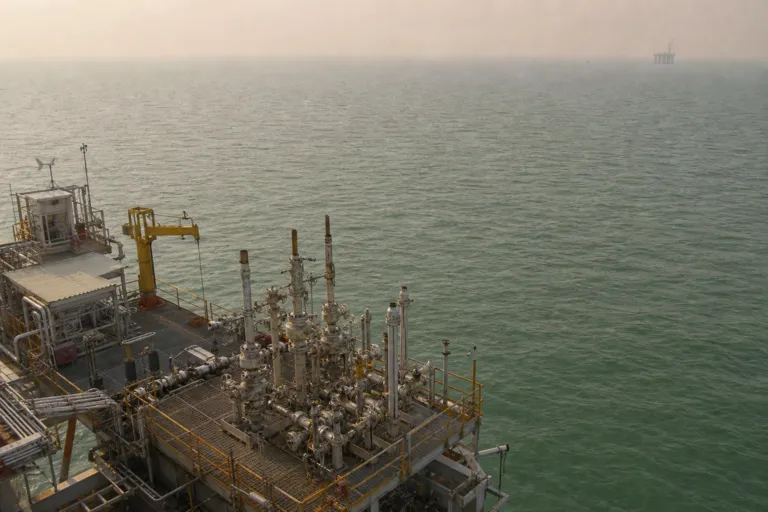
Thailand’s push on carbon capture is starting to look less like isolated research and more like an industrial roadmap, with the Gulf of Thailand at the center of activity. While Thailand still does not have an operational carbon capture, utilisation and storage (CCUS) project at scale, multiple initiatives now have clearer timelines and defined work programs. This matters in a country where the upstream oil and gas system is dominated by offshore operations, with the Gulf of Thailand accounting for approximately 90% of total production. In that same upstream context, natural gas represents nearly 80% of the resource type, keeping decarbonisation options closely tied to gas infrastructure and offshore geology.
Government-backed assessment work is also moving from desk-based evaluation into field activity. Under an expanded Thailand–Japan partnership, agreed terms of reference cover studying and evaluating geological storage potential in the Upper Gulf of Thailand. The plan includes seismic data re-processing and seismic surveys covering approximately 1,000 square kilometers, expected to begin in the third quarter of 2026. Exploratory drilling with laboratory analysis for in-depth assessment is anticipated to start in 2027. These steps are framed by the government as part of building a foundation for low-carbon industries, national competitiveness, and long-term sustainable economic development, with a stated commitment to integrated, transparent, and prudent implementation.
From Pilot Projects to Defined Storage Targets in the Gulf
On the operator side, Thailand carbon capture and storage efforts are becoming more concrete around the Arthit gas field in the Gulf of Thailand. One industry view describes Arthit as Thailand’s pilot CCS project that is expected to start operations in 2027. Separately, reporting on PTT’s decarbonisation plans states that a CCS project at the Arthit gas field is targeting the start of carbon storage by 2028, with potential injection capacity of up to one million tonnes of CO₂ per year. This combination of target dates and a stated potential injection level signals a shift from general ambition to project definitions that can be measured and financed.
The same sources point to broader hub-style thinking beyond a single field. PTTEP is described as working on study activity with INPEX for a hub in the Northern Gulf of Thailand and conducting a feasibility study in Thailand’s Eastern Economic Corridor. PTT is also progressing an Eastern Thailand CCS Hub in the upper Gulf of Thailand in collaboration with the government, and the project reportedly gained momentum after regulatory approval for exploration permits in the area. Regionally, the CCUS sector has been described as moving beyond a decade of pilots, with 2025 seeing the number of commercial CCUS facilities and total capture capacity grow sharply, offering a global backdrop as Thailand builds its own project pipeline.
Energy system pressures are shaping the business case for CCS planning alongside upstream strategy. Thailand’s natural gas supply has been changing as production declines in the Gulf of Thailand and the Gulf of Martaban, with LNG imports rising; more than 11.7 million tonnes were received in 2024. At the same time, a Thailand upstream market outlook says natural gas remains the backbone of national power generation, accounting for approximately 60% to 70% of the total energy mix as of 2026. It also notes the upstream market is expanding its definition to include Enhanced Oil Recovery (EOR) techniques and the integration of CCS technologies, aimed at unlocking high CO2 gas fields. Together, these factors help explain why offshore storage appraisal and field-linked CCS projects are gaining traction.
Does Thailand have a carbon capture, utilisation and storage project operating at scale today?
What is the planned scope of seismic surveys for storage appraisal in the Upper Gulf of Thailand?
When is the Arthit gas field CCS project expected to start, and what injection level has been cited?
How important is the Gulf of Thailand to Thailand’s upstream production footprint?
Why is Thailand carbon capture and storage being discussed alongside gas supply and LNG imports?