Thailand’s packaging landscape is expanding, and the push to redesign packs is intensifying as EPR expectations take shape. Mordor Intelligence values the Thailand packaging market at USD 15.68 billion in 2025 and estimates it will grow from USD 16.4 billion in 2026 to USD 20.34 billion by 2031, at a 4.4% CAGR (2026–2031). Within that broader market, flexible formats already lead: flexible packs held 63.78% of packaging value in 2025 and are projected to grow at 5.25% through 2031. Mordor Intelligence also notes that converters are redesigning portfolios to meet the draft Packaging Act’s anticipated EPR targets, which favor lighter, mono-material structures over heavy, rigid formats.
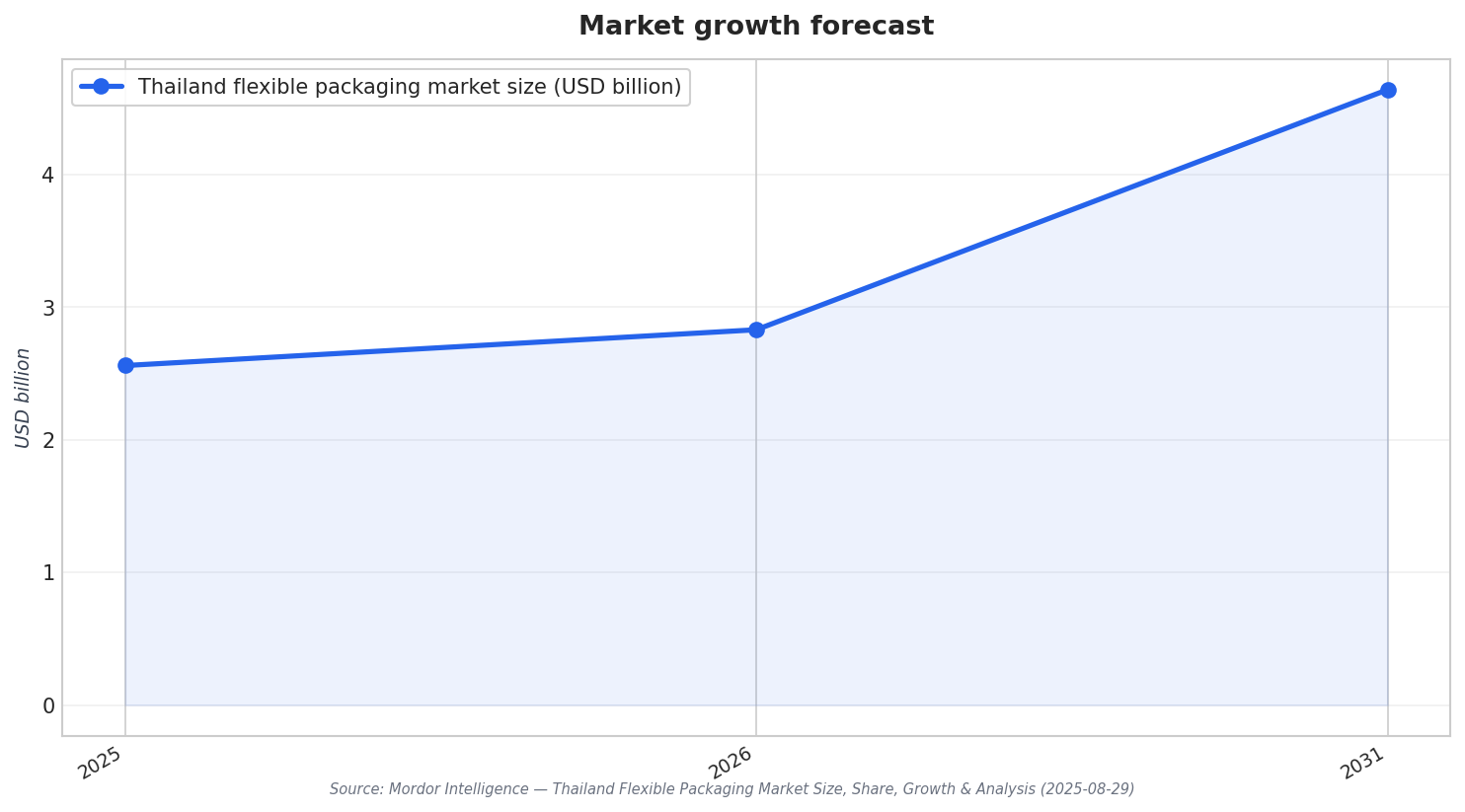
In parallel, the Thailand flexible packaging market is growing quickly. Mordor Intelligence values it at USD 2.56 billion in 2025 and estimates growth from USD 2.83 billion in 2026 to USD 4.64 billion by 2031, at a 10.39% CAGR (2026–2031). The same source describes how brand-owner commitments to recyclability are nudging converters toward mono-material, machine-direction-oriented polyethylene (MDO-PE), even while high-barrier multilayer laminates remain critical for oxygen-sensitive foods. That tension matters because multilayer barrier laminates still commanded 62.48% share in 2025, yet mono-material structures are poised to grow at a 10.77% CAGR to 2031.
E-Commerce, Food Exports, and Investment Are Forcing Lighter Designs
Logistics is a practical driver of downgauging and material simplification. Mordor Intelligence reports daily parcel throughput climbed to 7–8 million in 2025, and private couriers installed automated sorters to handle peak loads of more than 12 million parcels per day. As shipping shifts from corrugated to lighter mail-ready formats, converters trimmed mailer gauges to 40–60 microns and enabled 20–30% last-mile freight cost savings for these lightweight mailers. At the same time, Thailand’s role in food trade keeps the need for performance films in focus: the Thailand packaging report notes the country shipped USD 32.8 billion worth of food products in 2024, supporting demand for barrier packaging during long transit.
Policy and industrial capital are also shaping the Thailand flexible packaging industry’s pivot to recyclable formats. The Thailand packaging report highlights Board of Investment approvals totaling THB 721 billion (USD 20.6 billion) in 2024, with spending channeled into food processing, automation, and related packaging lines. In the flexible pack mix, pouches led with 36.71% market share in 2025, and sachets and stick packs are advancing at an 11.54% CAGR through 2031. Materials are changing too: plastics represented 54.89% of Thailand’s flexible packaging market in 2025, while bioplastics are projected to expand at an 11.36% CAGR through 2031, reflecting a broader search for more sustainable pack outcomes.
Regional EPR frameworks reinforce the direction of travel and raise expectations for disclosure and recyclability. MarkWide Research states that Thailand’s Roadmap on Plastic Waste Management, Indonesia’s National Action Plan on Marine Plastic Debris, and Singapore’s Resource Sustainability Act collectively mandate extended producer responsibility and recyclability disclosures that reshape converter R&D priorities. For Thailand-focused exporters, pack design choices can also become a market-access issue. MarkWide Research notes premium seafood exporters in Thailand are piloting structures intended to eliminate multi-polymer separation requirements at recycling facilities, extending recyclable-format logic from early pilots into broader shelf-stable use cases. These pressures keep the pivot active across materials, structures, and converting investments.
How fast is Thailand’s flexible packaging market projected to grow?
What packaging structures are gaining ground under recyclability goals?
How is e-commerce influencing lightweight flexible packaging in Thailand?
What role does food trade play in packaging demand in Thailand?
What is driving the Thailand flexible packaging industry toward EPR-aligned redesigns?