
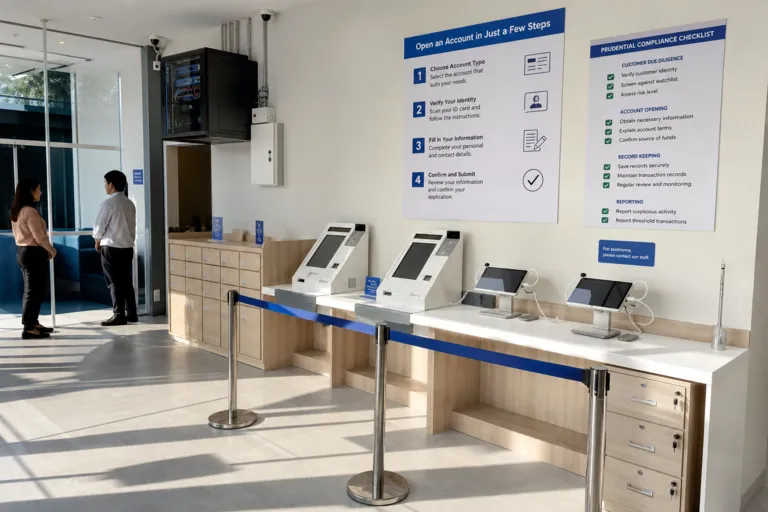
Thailand is entering a new phase of digital finance as CLICX prepares to open for service on June 19, positioning itself as the country’s first branchless commercial bank. The launch signals a shift from licensing to competition after the Finance Ministry, following a recommendation from the Bank of Thailand (BOT), approved three groups to establish virtual banks in June 2025. CLICX is jointly backed by Krungthai Bank (KTB), Advanced Info Service (AIS), and PTT Oil and Retail Business (OR), combining a state-linked bank, a mobile operator, and a nationwide retail and energy network. That structure is designed to give the bank data access, technology capability, and an immediate customer base from day one.
The pitch is financial inclusion, but it is built around a different way of measuring creditworthiness. In an official statement shared ahead of the June 2026 application launch, Clicx Bank Public Company Limited said it aims to expand credit access for underbanked populations by leveraging technological partnerships under the vision “Bank in One CLICX.” The Bank of Thailand has highlighted a structural gap: over 63% of Thais remain underserved by standard financial services. Another pressure point is resilience, with more than 80% of the population holding emergency savings that would cover living expenses for less than six months in the event of an unexpected income disruption.
Strict Oversight, Cautious Growth, and a Data-Driven Model
Even with a digital-first approach, early operations are expected to be cautious. Kiatnakin Phatra Securities said Thailand’s virtual banks will face the same core prudential standards as commercial banks, including capital requirements, close supervision during the early years, and strict risk controls. The same analysis warned that this framework, while designed to reduce failure risk, may slow asset growth, limit risk-taking, and delay profitability. In practice, operators are expected to focus first on infrastructure, risk management, and regulatory compliance rather than rapid loan growth or aggressive price competition.
CLICX’s strategy is to use alternative data and behavioral insights to serve customers often excluded by traditional requirements. Suporn Sunthornrohit, Chief Executive Officer of CLICX Bank, said irregular income earners such as freelancers, self-employed professionals, and small business owners can be left out due to limited formal income documentation or conventional credit histories. CLICX has also framed its branchless structure as a way to reduce operating costs compared with traditional lenders and potentially pass savings into more competitive products. Management has emphasized strict principles of personal data protection and international security standards as it builds digital services spanning savings, money management, and credit.
The wider market is set to expand beyond the first launch. Two other players are expected to follow CLICX: Ascend Bank, operated by ACM Holding under the Ascend Money group, is expected to open in July, while BankX, led by SCB X with KakaoBank Corp and WeTechnology Limited, plans to begin operations by the end of 2026. Analysts noted that CLICX and BankX are backed by financial institutions and strategic partners with regulatory familiarity and balance-sheet support, while Ascend Bank benefits from an ecosystem embedded in digital payments and consumer services through TrueMoney. As Thailand virtual banking moves into this competitive phase, the key test will be whether each licensed group can turn its ecosystem and data into products that match real customer needs.
When does CLICX begin service as Thailand’s first branchless commercial bank?
How many virtual bank groups were approved in Thailand, and when?
What problem is CLICX trying to address in access to financial services?
How is Thailand’s virtual banking rollout expected to be regulated in the early years?
What is next after CLICX in Thailand’s virtual banking market?