Thailand’s pharmaceutical base is expanding, and that momentum is shaping how the country thinks about vaccines and biologics. In 2024, Thailand’s pharmaceutical market reached approximately 240 billion baht, up from 212 billion baht in 2023, positioning it as the third-largest pharma market in Southeast Asia. Krungsri Research’s Industry Outlook 2025–2027 projects domestic drug sales growth of 6.0–7.0% annually through 2027, and Grand View Research projects the market will reach USD 13.9 billion (approximately 480 billion baht) by 2030, implying a CAGR of 7.7%. This demand backdrop matters because vaccine and biologics initiatives need stable local pull-through, predictable procurement, and a manufacturing ecosystem that can scale beyond small molecules.
Several structural drivers reinforce the case for building more local capability in biologics and vaccine-related supply chains. People aged 60 and above now exceed 21% of Thailand’s population, increasing sustained need for medicines across major chronic disease categories. Thailand’s Universal Coverage Scheme (UCS) was expanded significantly in 2025 with a budget allocation of THB 235 billion, an 8.3% increase, widening access to treatments including cancer care and type-2 diabetes management. Medical tourism also adds demand outside the domestic insurance framework, with approximately 2 million international patients annually entering Thailand’s private hospital system. Pharmaceuticals account for 29% of all national healthcare spending, and 90% of domestic production is consumed domestically, with the remaining 10% exported primarily to Vietnam, Myanmar, and Cambodia.
Where Self-Sufficiency Hits Reality: Inputs, Expertise, and Imports
Thailand’s ambitions in vaccines and biologics face a practical bottleneck: specialized components and know-how are not always available locally at the required GMP level. An IndexBox analysis of the TLR4 synthetic agonists market in Thailand describes domestic demand coming primarily from local vaccine research initiatives, academic immunology programs, and the regional operations of global vaccine developers. That same source notes demand is almost entirely met through imports of both research-grade and GMP-grade material from established supply clusters in North America, Europe, and parts of Asia-Pacific with advanced synthetic chemistry CDMO ecosystems. It also states Thailand’s manufacturing base, while significant for small molecules and biologics, generally lacks the specialized immunochemistry and GMP expertise needed to synthesize complex TLR4 agonist APIs, creating high import dependence for a critical component.
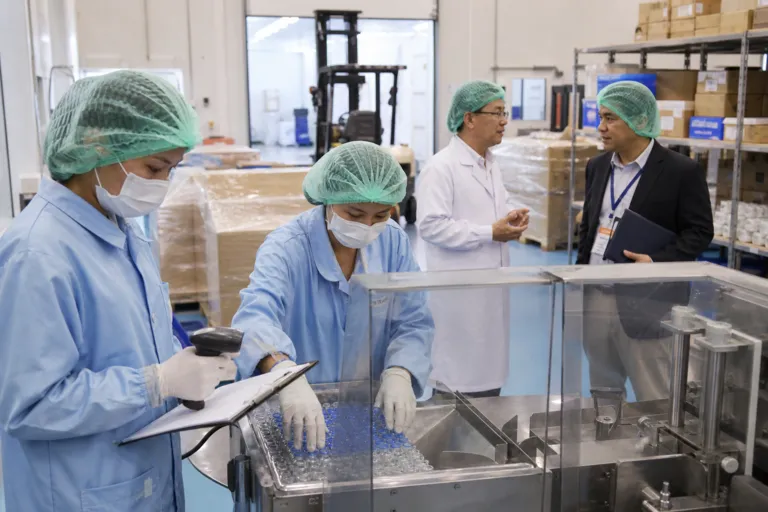
Even so, the pathway toward more regional resilience is being described in concrete, buildable steps. The same IndexBox report outlines a “more ambitious, yet plausible” scenario in which Thailand positions itself as a regional center of excellence for adjuvant formulation and vaccine fill-finish. It adds that this would require concerted public-private partnerships to build technical and regulatory expertise, potentially anchored by a multinational vaccine manufacturer or a strategic alliance with a global CDMO. It also highlights why urgency is rising: post-pandemic supply chain strategies are encouraging regional capacity development for critical components, and pandemic preparedness stockpiling is pushing strategic sourcing of defined adjuvant systems. As candidates advance, demand shifts decisively toward GMP-grade material, with buyers including vaccine developers and CDMOs working for global sponsors.
Broader industry signals point in the same direction: Thailand is already being positioned as a regional pharmaceutical hub, with rising investments in local manufacturing and government initiatives to promote the sector, according to Grand View Research’s Thailand pharmaceutical market outlook. That outlook also notes biologics and biosimilars (large molecules) are the most lucrative molecule segment and are registering the fastest growth during the forecast period. Thailand accounted for 0.6% of the global pharmaceutical market in 2025, framing the country as meaningful but still small on the global scale. For the Thailand vaccine manufacturing industry to advance toward regional self-sufficiency, the sources consistently point to the same practical agenda: deepen technical and regulatory capabilities, reduce import dependence for specialized inputs, and use partnerships to turn fill-finish and adjuvant formulation into scalable strengths.
What is driving Thailand’s push toward more vaccine and biologics capability?
How dependent is Thailand on imports for specialized vaccine inputs?
What role could fill-finish and adjuvant formulation play in regional self-sufficiency?
How large is Thailand’s footprint in the global pharmaceutical market?
What does the article mean by the Thailand vaccine manufacturing industry moving toward self-sufficiency?