
Thailand’s esports and gaming scene is increasingly defined by scale, spending, and structured competition. Multiple reports describe the country as Southeast Asia’s second-largest gaming market, and one projects market revenue reaching USD 2.37 billion in 2025. Another legal-industry review puts today’s market valuation at more than USD 1.3 billion. Ampverse also points to breadth: Thailand has more than 58 million players, and it frames the country as one of the region’s more advanced gaming markets due to engagement, infrastructure, and monetisation potential.
Commercial maturity shows up in monetisation behavior and discovery habits. A Thailand gaming and payment trends report says nearly half of players (49%) are paying users, and per-capita spending stands at USD 393, described as the highest in Southeast Asia. That same report argues that success often requires putting Key Opinion Leader (KOL) marketing at the center and leaning into Facebook’s dominance. It says over 70% of gamers discover new titles through Facebook via KOL livestreams and recommendations, and that official pages and player-run groups support retention through updates, recruitment, and community activity.
Esports Infrastructure, Major Events, and Policy Support
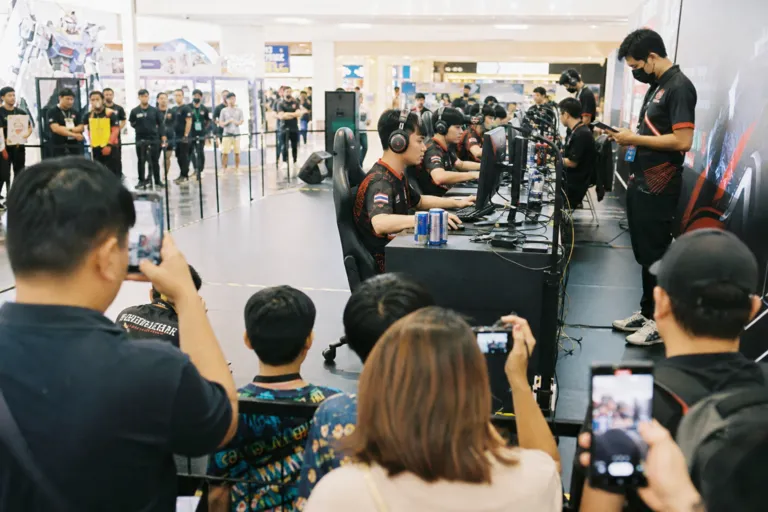
Competitive gaming has also matured from grassroots play into a more organized industry. A legal overview notes Thailand has hosted more than 1,400 tournaments, and top teams have earned close to USD 30 million in prizemoney. It also states esports participation is expected to nearly double from 9.8 million in 2021 to 18.7 million by 2027, while the average fan spends five hours a week watching esports content. In 2025, Bangkok hosted Valorant Masters at Impact Arena, bringing 44 top teams to compete for a USD 500,000 prize pool, the first time the tournament was held in Southeast Asia.
Payments and regulation are becoming part of the competitive-and-commercial story, not side issues. One report highlights relatively low credit card penetration and says the ecosystem is built around bank transfers and digital wallets, with PromptPay used for transfers and TrueMoney Wallet holding the largest digital wallet market share for gaming payments. It also flags payment failures and cumbersome processes as major pain points, with lengthy redirection disrupting the experience. Separately, the legal review notes the government has enshrined esports within soft-power and sports policies, treating competitive gaming as a bona fide sport and supporting athlete development.
Local cultural output is also feeding Thailand’s positioning as a hub, not just a consumer market. The Thailand payment-and-trends report uses the Thai horror game Home Sweet Home to show that mythology- and culture-rooted storytelling can drive local appeal. The legal review extends that global reach narrative, noting Hollywood adapted the Thai-produced game into a movie released as Home Sweet Home: Rebirth, featuring Thai actors alongside international talent. Taken together, these signals show how the Thailand esports and gaming industry is converging around creators, local platforms, competitive circuits, and exportable IP.
How large is Thailand’s gaming market according to recent reports?
What makes Thailand stand out in player spending and monetisation?
What are the key esports participation and viewing trends in Thailand?
Which major tournament did Bangkok host, and what were the headline details?
What are the main payment methods and pain points for gamers in Thailand?