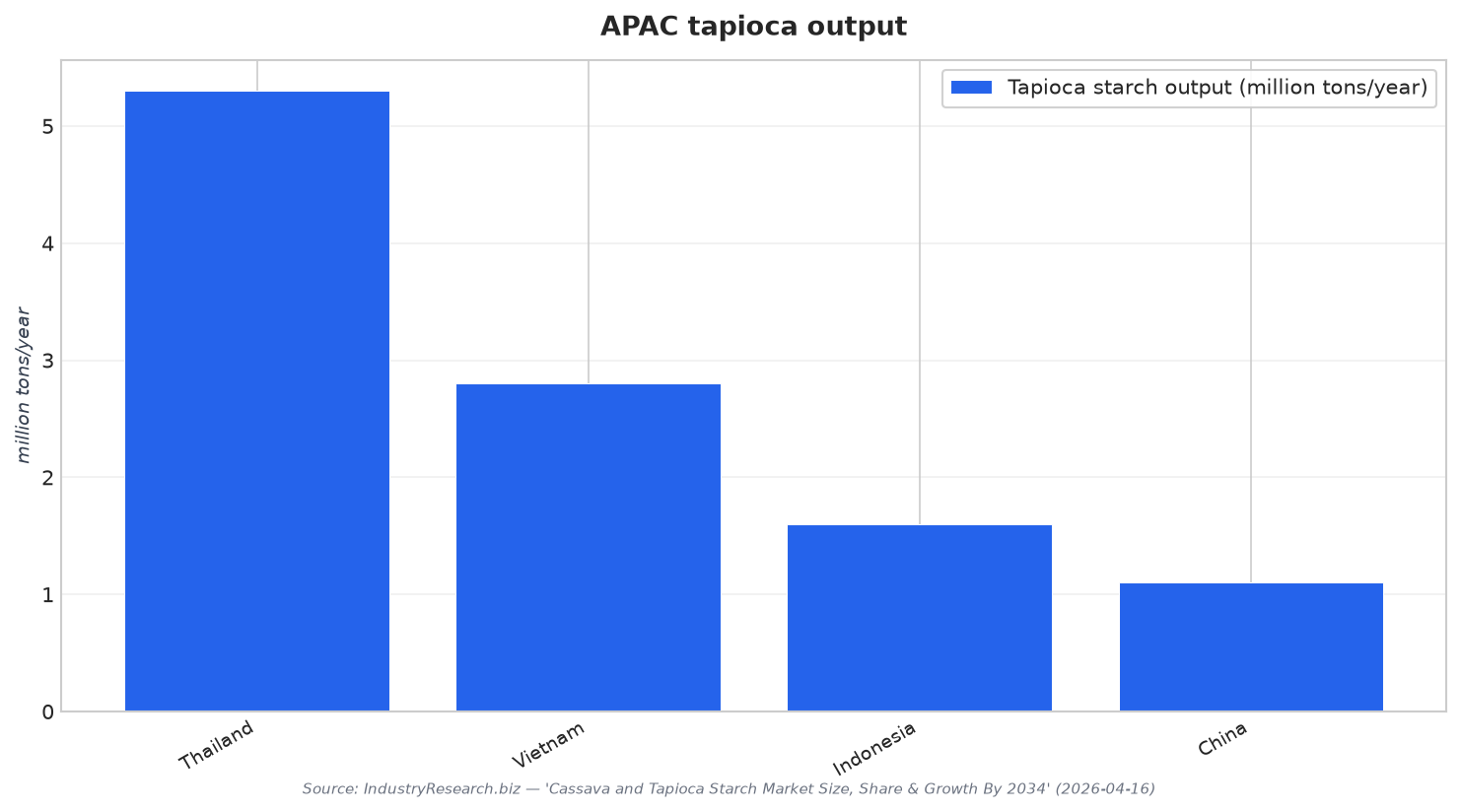
Thailand sits at the center of the Asia-Pacific cassava and tapioca starch supply chain, and the country’s export position shapes how processors plan capacity, procurement, and product mix. Asia-Pacific contributes 72% of total global output in cassava and tapioca starch, according to an industry market report. Within that footprint, Thailand alone produces over 5.3 million tons annually and accounts for 47% of exports. Another global trade overview says Thailand accounts for roughly a quarter of all cassava product exports worldwide, underscoring how strongly the country’s starch decisions can ripple into global pricing and availability.
Export demand is not evenly distributed, and buyers’ concentration matters. China is described as the dominant buyer of Thai cassava products, absorbing well over half of all export volume in recent years, based on the Thai Tapioca Trade Association as cited in a tapioca market landscape overview. A broader cassava market report also frames China as a major importer and projects 21–23 million tons of additional cassava imports needed for food and ethanol production. While that projection is not Thailand-specific, it helps explain why Thai exporters watch China’s demand signals closely when prioritizing shipments of starch, chips, and other derivatives.
Rising Ethanol Pull and the Production Squeeze
At the same time, ethanol-linked demand is becoming a stronger factor in domestic market dynamics. One cassava market report notes that, in Thailand, government measures with a focus on ethanol production coincided with a 53% surge in cassava chip prices since early 2024. That price swing matters because chips can compete with starch processors for the same roots and can raise raw material costs across the chain. It also arrives as supply conditions have been stressed. A tapioca market landscape report states Thai cassava output fell 6.5% in 2024 due to below-average rainfall and disease pressure, tightening availability for both export contracts and fuel-adjacent uses.
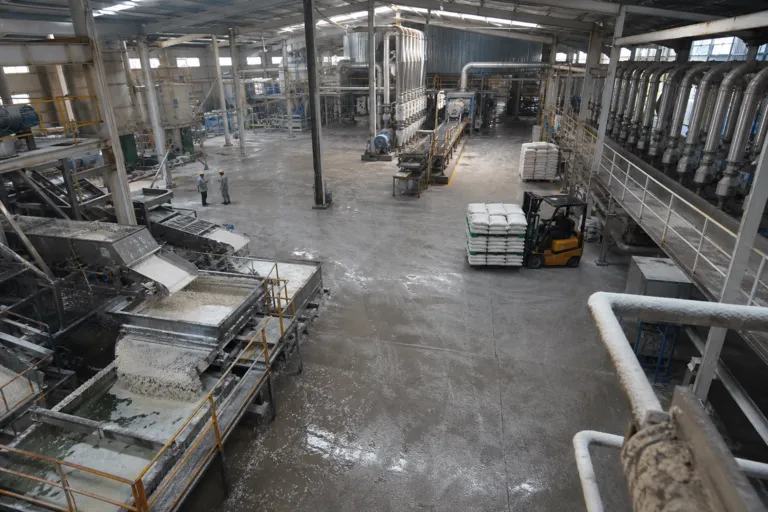
Industry players are responding by expanding processing capacity and building more flexibility into product portfolios. A cassava and tapioca starch market report says that in 2024, over 25 new processing facilities were established in Thailand and Vietnam, reflecting a push to increase throughput and support rising demand across food, pharmaceutical, packaging, and other end uses. The same report adds that over $1.2 billion in industrial investment was allocated between 2023 and 2025 toward new processing facilities and R&D expansion, and that Thailand and Vietnam received 48% of total global investment in 2024. These moves align with a trend toward diversified, higher-value derivatives, including resistant starch and bioplastic feedstock, as highlighted in a global tapioca market overview.
Market positioning still depends on reliability, quality, and the ability to meet evolving buyer requirements. A Thailand-focused industry overview emphasizes established quality standards and regulations, a diversified processing base that includes starch and ethanol, and export relationships with over 100 countries. But competition and substitution risks remain. The tapioca market landscape warns that buyers can substitute corn and potato starch when tapioca prices rise, and that export markets increasingly require certifications covering food safety, sustainability, and environmental impact. For the Thailand cassava starch industry, the practical balancing act is clear: protect supply consistency during weather and disease shocks, keep export customers served—especially China—while managing the domestic pull from ethanol-related demand that can reshape prices and margins.
Why is China so important to Thailand’s cassava and tapioca exports?
What is Thailand’s scale in cassava and tapioca starch production and exports?
How has ethanol-focused policy been linked to cassava price movement in Thailand?
What recent factors tightened Thailand’s cassava supply?
How is the Thailand cassava starch industry expanding processing capacity?