
Client
Issues
The utility was challenged by an outdated electrical grid that struggled to meet rising energy demands and accommodate the influx of renewable energy from solar and wind farms. Frequent strain on the grid led to instability and occasional outages in peak periods.
Additionally, the reliance on centralized fossil-fuel power plants conflicted with Thailand’s sustainability commitments, and there was limited capacity for two-way energy flow needed for distributed energy resources (such as rooftop solar) to feed into the grid. The utility also faced difficulties in monitoring and managing the grid in real time due to a lack of smart measurement and control systems.
Solution
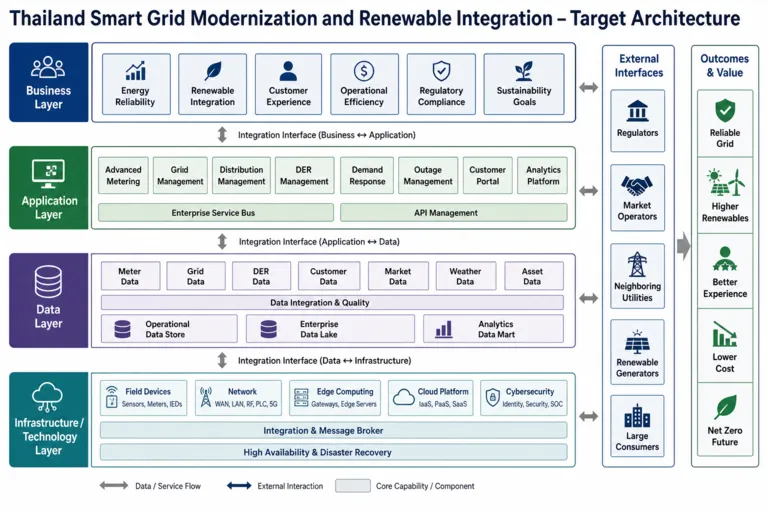
Eurogroup Consulting proposed a strategic overhaul of the energy grid, centered on implementing smart grid technologies. The solution included deploying smart meters and sensors throughout the network to provide real-time data on electricity usage and grid performance.
Advanced grid management software and AI-based analytics were introduced to predict demand surges and automatically balance loads across regions. To improve renewable integration, the plan called for investing in energy storage systems (such as large-scale batteries) and upgrading transmission infrastructure to better handle the variable output from wind and solar farms.
Policy recommendations were also made to encourage distributed generation, allowing businesses and households with solar panels to sell excess power back to the grid seamlessly.
Approach
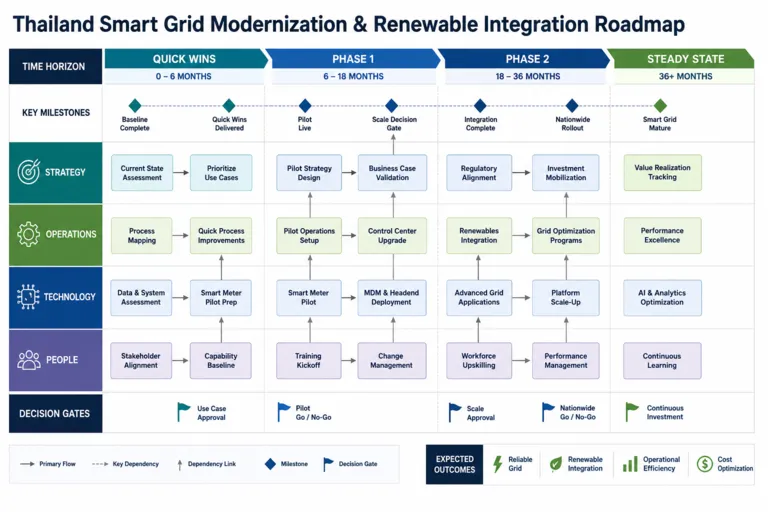
The modernization initiative began with pilot programs in a few key regions that experienced frequent brownouts. Eurogroup Consulting worked hand-in-hand with the utility’s engineers to install smart meters in thousands of households and integrate those with a central management system.
Parallel to this, a new operations control center was established, equipped with state-of-the-art grid management software to visualize and manage electricity flows in real time. The consultancy facilitated training sessions for grid operators to effectively use predictive analytics tools for demand forecasting.
To test renewable integration improvements, the team oversaw a project linking a new wind farm and battery storage facility to the grid, refining the protocols for smoothing out the intermittent power supply. Regular coordination meetings with government energy regulators ensured that the technical upgrades aligned with evolving energy policies and standards.
Recommendations
Upon project completion, Eurogroup Consulting recommended a continued rollout of smart grid technologies nationwide, prioritizing regions with the highest growth in demand.
It was advised that the utility establish an innovation task force to keep exploring emerging energy technologies, such as microgrids and peer-to-peer energy trading platforms. Strengthening cybersecurity measures for the grid was emphasized, given the increased digitalization of operations.
The consultancy also underscored the importance of community awareness programs, educating the public on energy conservation and the benefits of the smart grid, to encourage user participation in load management (for instance, through incentive programs for off-peak usage). Finally, ongoing collaboration with independent renewable energy producers was encouraged to steadily increase the share of clean energy in the power mix.
Engagement ROI
The grid modernization efforts delivered notable improvements in Thailand’s energy landscape. Regions equipped with smart grid systems saw a significant reduction in power outages, improving reliability for both industry and households.
Real-time monitoring and automated adjustments led to a more efficient balance of supply and demand, cutting down energy waste and operational costs. The utility successfully integrated a higher percentage of renewable energy into the grid—solar and wind sources that previously might have been curtailed were now utilized fully, contributing to a cleaner energy mix.
These upgrades not only helped Thailand make progress toward its sustainability targets but also enhanced energy security. With a more resilient and intelligent grid, the national utility positioned itself as a regional leader in energy innovation, and consumers benefited from more stable and potentially cost-effective power supply.